Within Risk Standards
Which AI Systems Need the Strongest Safeguards?
Risk standards call for stronger controls when AI affects healthcare, jobs, benefits, finance, or other life-changing decisions.
On this page
- Why impact severity changes governance expectations
- How autonomy, scale, and sensitive data raise risk
- Examples from employment, healthcare, finance, and welfare
Page outline Jump by section
Introduction
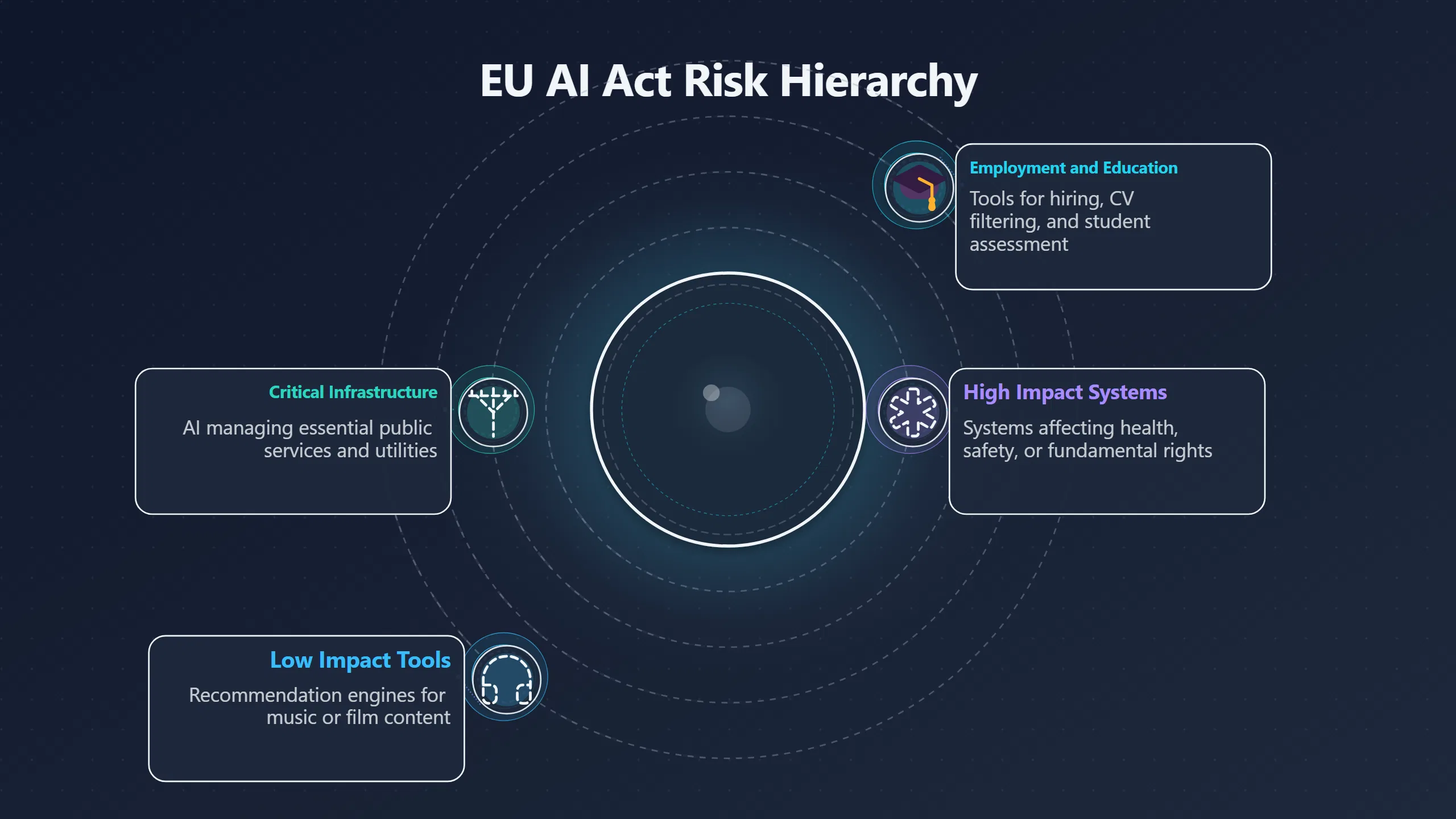
Not every AI system needs the same level of oversight. A recommendation engine that suggests films or music can usually tolerate occasional mistakes with limited consequences. By contrast, an AI system that helps decide who gets a job interview, qualifies for a loan, receives medical treatment, or gains access to public benefits can have lasting effects on a person’s opportunities, income, health, and rights. For that reason, modern AI risk standards increasingly follow a simple principle: the greater the potential impact on people’s lives, the stronger the safeguards should be. This risk-based approach appears in major governance frameworks and regulations, including the NIST AI Risk Management Framework, the OECD AI Principles, and the European Union’s AI Act.[Consilium+2Modulos Docs]consilium.europa.euArtificial intelligence (AI) act: Council gives final green light to the first worldwide rules on AI - ConsiliumMay 21, 2024…
 The central question is not whether AI is being used, but how much harm could result if it fails, behaves unfairly, or is used without adequate oversight.
Why Impact Severity Changes Governance Expectations
Risk standards are built around the idea that consequences matter. When an AI error affects convenience, the cost may be minor. When an AI error affects employment, healthcare, education, financial access, or welfare support, the consequences can shape a person’s future for years.
This is why many governance frameworks reject a one-size-fits-all model. Instead, they require organisations to assess the likely effects of incorrect predictions, biased outputs, security failures, or inappropriate automation before deciding what controls are necessary. The higher the potential harm, the stronger the expectations for testing, monitoring, documentation, accountability, and human oversight.[Modulos Docs+2OECD.AI]docs.modulos.aiModulos DocsNIST AI Risk Management Framework 1.0 (NIST AI RMF) — Complete Guide | Modulos Docs…
A useful way to think about this is through the difference between inconvenience and deprivation. If a streaming service recommends the wrong programme, the user loses a few minutes. If an AI system wrongly identifies someone as ineligible for a benefit, denies a mortgage application, or contributes to a medical misdiagnosis, the effects may be financial, social, or physical. Governance standards therefore treat these systems differently because the stakes are different.
The EU AI Act formalises this principle through a risk-based structure that imposes stricter obligations on systems used in areas where errors can affect health, safety, or fundamental rights. High-risk categories include employment, education, essential services, critical infrastructure, and other domains where decisions can significantly influence people’s lives.[Consilium+2Digital Strategy]consilium.europa.euArtificial intelligence (AI) act: Council gives final green light to the first worldwide rules on AI - ConsiliumMay 21, 2024…
How Autonomy, Scale, and Sensitive Data Raise Risk
Impact severity is not determined solely by the subject matter. Risk standards also examine how an AI system operates and how broadly its decisions affect people.
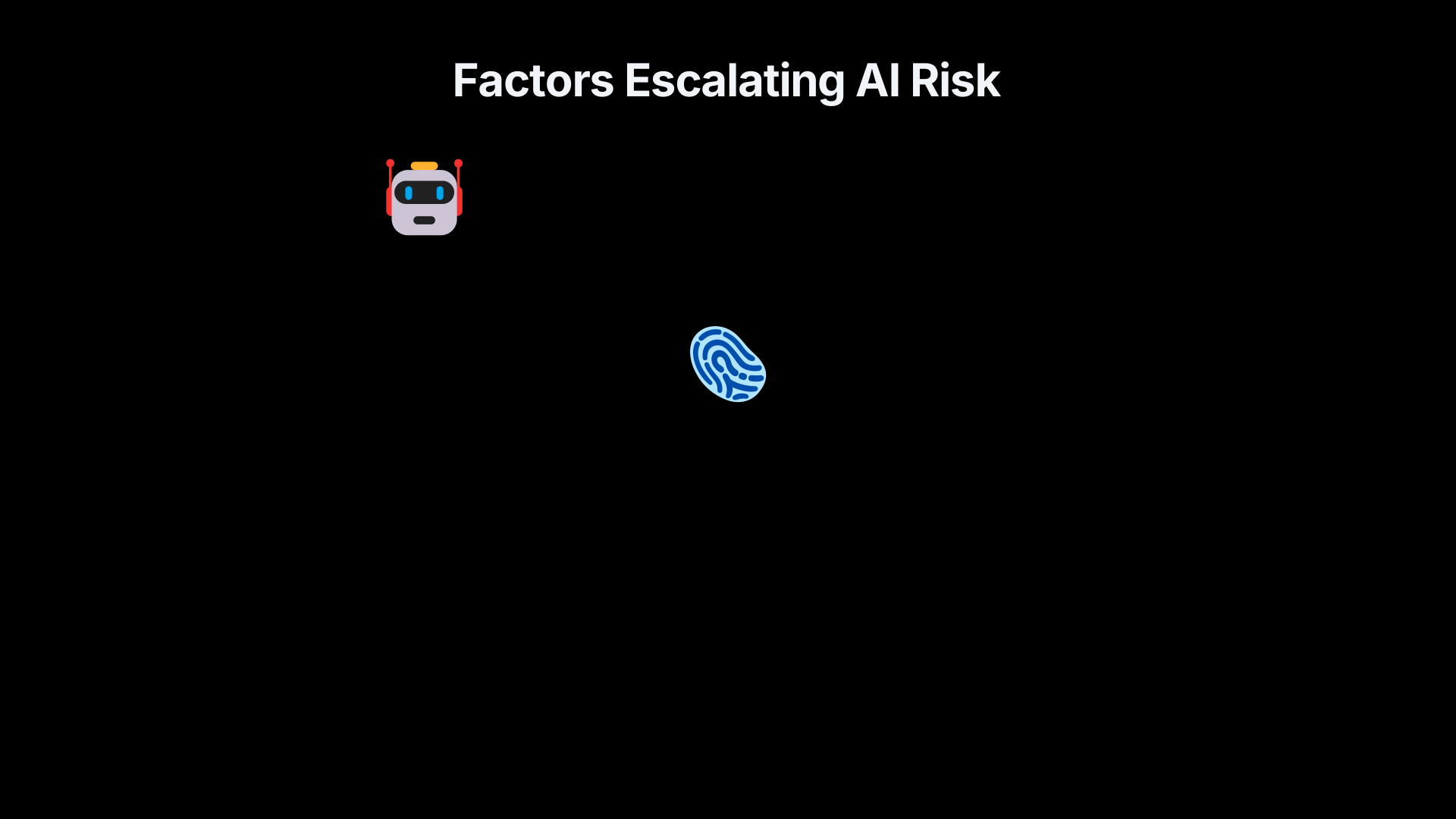
Several factors tend to increase governance expectations:
- Autonomy: Systems that make or heavily influence decisions without meaningful human review create greater risk than tools that simply provide advice.
- Scale: A flawed system used on millions of people can cause widespread harm even if its error rate appears low.
- Speed: Automated systems can repeat mistakes rapidly before problems are detected.
- Data sensitivity: Systems that use health records, financial information, biometric data, or other sensitive personal information create additional privacy and security concerns.
- Ability to challenge decisions: Risks rise when affected individuals cannot easily understand, question, or appeal outcomes.[OECD+2OECD.AI]oecd.orgAI principles | OECDAI principles | OECD…
A hiring algorithm illustrates the interaction of these factors. If the system screens thousands of applicants automatically, uses personal information, and rejects candidates before a human review occurs, a small design flaw can affect large numbers of people. In such situations, governance standards typically call for stronger auditing, documentation, performance testing, and oversight mechanisms.
The OECD’s AI principles emphasise accountability, traceability, transparency, and ongoing risk management precisely because organisations need ways to investigate decisions, understand failures, and respond when harms occur.[OECD.AI+2OECD]oecd.aiAccountability (OECD AI PrincipleAccountability (OECD AI Principle
Examples from Employment, Healthcare, Finance, and Welfare
Employment
Employment decisions are among the most frequently cited examples of high-impact AI use. Systems may rank applicants, filter CVs, assess interview responses, or predict employee performance.
The concern is not simply technical accuracy. Historical employment data may reflect past inequalities, causing an AI system to reproduce patterns that disadvantage certain groups. Because hiring decisions influence income, career opportunities, and economic mobility, regulators increasingly treat employment-related AI as a high-risk category requiring stronger controls.[Legalithm+2AI Act Service Desk]legalithm.comAnnex III EU AI Act: High-risk AI system areas explainedAnnex III EU AI Act: High-risk AI system areas explained…
Safeguards often include human review of significant decisions, testing for disparate impacts across demographic groups, documentation of model limitations, and mechanisms that allow candidates to challenge outcomes.
Healthcare
Healthcare combines high consequences with uncertainty. AI systems may help detect diseases, prioritise patients, interpret medical images, or support treatment planning.
A highly accurate model can still create serious problems if it performs poorly for certain populations, relies on incomplete data, or is used beyond its intended purpose. Because errors can affect patient safety and health outcomes, healthcare AI frequently faces some of the strongest governance requirements.[Digital Strategy+2Consilium]digital-strategy.ec.europa.euDigital Strategy Navigating the AI Act | Shaping Europe’s digital futureDigital Strategy Navigating the AI Act | Shaping Europe’s digital future
Risk standards therefore emphasise validation, monitoring after deployment, documentation of known limitations, and retaining human clinical judgement rather than allowing automated outputs to become unquestioned decisions.
Finance
AI increasingly influences lending, insurance, fraud detection, and credit assessment.
Financial decisions can determine whether individuals can buy homes, start businesses, obtain insurance, or access essential services. Even when models improve efficiency, opacity can create problems if applicants cannot understand why they were rejected or how to correct errors in the underlying data. Governance frameworks therefore place strong emphasis on explainability, accountability, and review processes when financial outcomes are affected.[OECD+2OECD.AI]oecd.orgAI principles | OECDAI principles | OECD…
Welfare and Public Benefits
Public-sector AI systems may help evaluate eligibility for housing assistance, social support, healthcare benefits, or other public services.
These systems often affect vulnerable populations with limited resources to challenge mistakes. An incorrect decision can have immediate consequences for income, housing stability, or access to care. Because of these risks, access to essential public and private services is explicitly identified as a high-risk area in the EU’s AI governance framework.[Legalithm+2AI Act Service Desk]legalithm.comAnnex III EU AI Act: High-risk AI system areas explainedAnnex III EU AI Act: High-risk AI system areas explained…
In this context, safeguards commonly focus on transparency, appeal rights, human review, and careful monitoring for unfair outcomes.
What Stronger Safeguards Usually Look Like
When an AI system is considered high impact, governance standards generally do not prohibit its use. Instead, they demand evidence that risks are being actively managed.
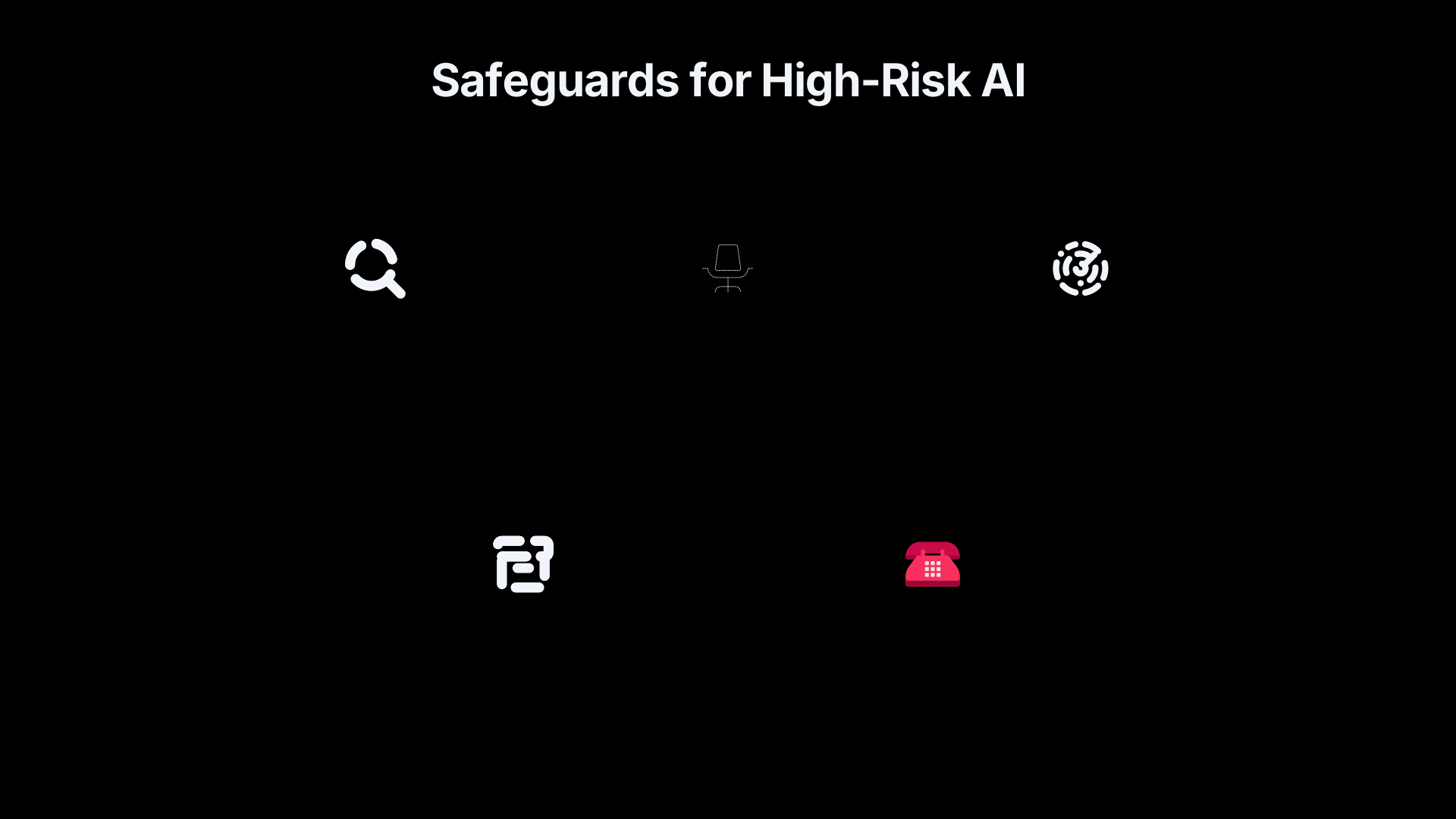
Common safeguards include:
- Thorough testing before deployment.
- Independent review or auditing.
- Continuous performance monitoring.
- Documentation of training data, assumptions, and limitations.
- Human oversight for consequential decisions.
- Processes for complaints, appeals, and corrections.
- Security and privacy protections for sensitive information.
- Clear accountability for system outcomes.[Modulos Docs+2OECD.AI]docs.modulos.aiModulos DocsNIST AI Risk Management Framework 1.0 (NIST AI RMF) — Complete Guide | Modulos Docs…
These controls are intended to ensure that organisations can explain how decisions were made, detect problems early, and intervene when systems produce harmful or unreliable results.
The Ongoing Debate About High-Risk Classification
One challenge is deciding exactly which AI systems deserve the strongest controls. Some experts argue that organisations often underestimate risks because individual decisions appear routine. Others warn that excessively broad classifications could burden useful systems with costly compliance requirements.
The debate increasingly centres on context rather than technology alone. The same underlying AI model may pose relatively low risk when recommending products but much higher risk when influencing hiring, medical, or welfare decisions. Recent guidance related to the EU AI Act reflects this focus on intended use and real-world consequences rather than treating all AI applications as equally risky.[Digital Strategy+2IT Pro]digital-strategy.ec.europa.euDigital Strategy Navigating the AI Act | Shaping Europe’s digital futureDigital Strategy Navigating the AI Act | Shaping Europe’s digital future
For that reason, modern AI governance is moving towards a practical principle: safeguards should scale with the potential impact on people. The more an AI system can shape someone’s health, livelihood, rights, or access to essential services, the stronger the justification for rigorous oversight, transparency, and accountability.[Consilium+2OECD]consilium.europa.euArtificial intelligence (AI) act: Council gives final green light to the first worldwide rules on AI - ConsiliumMay 21, 2024…
Amazon book picks
Further Reading
Books and field guides related to Which AI Systems Need the Strongest Safeguards?. Use these as the next step if you want deeper reading beyond the article.
The Alignment Problem
Examines failures and risks in consequential AI decision-making.
Weapons of Math Destruction
Shows how high-impact algorithmic decisions affect jobs, finance and public services.
eBay marketplace picks
Marketplace Samples
Example marketplace items related to this page. Use the search link to explore similar finds on eBay.



Endnotes
1.
Source: docs.modulos.ai
Link:https://docs.modulos.ai/frameworks/nist-ai-rmf/
Source snippet
Modulos DocsNIST AI Risk Management Framework 1.0 (NIST AI RMF) — Complete Guide | Modulos Docs...
2.
Source: oecd.org
Title: AI principles | OECD
Link:https://www.oecd.org/en/topics/ai-principles.html
Source snippet
AI principles | OECD...
3.
Source: oecd.ai
Title: Accountability (OECD AI Principle)
Link:https://oecd.ai/en/dashboards/ai-principles/P9?s=03
4.
Source: legalithm.com
Title: Annex III EU AI Act: High-risk AI system areas explained
Link:https://www.legalithm.com/en/ai-act-guide/annex-iii-high-risk-areas
Source snippet
Annex III EU AI Act: High-risk AI system areas explained...
5.
Source: oecd.org
Title: Advancing accountability in AI | OECD
Link:https://www.oecd.org/en/publications/advancing-accountability-in-ai_2448f04b-en.html
Source snippet
Advancing accountability in AI | OECD...
6.
Source: nist.gov
Title: www.nist.gov A I Risk Management Framework
Link:https://www.nist.gov/node/1674691
Source snippet
Risk Management Framework - Engage | NISTApril 9, 2025...
Published: April 9, 2025
7.
Source: youtube.com
Title: EU AI Act
Link:https://www.youtube.com/watch?v=yOmRWplaNDk
Source snippet
Assessing "high risk AI systems" under the EU AI Act...
8.
Source: youtube.com
Title: 4 High-Risk AI in HR: Avoiding Legal Trouble
Link:https://www.youtube.com/watch?v=MkBSwboSNLo
Source snippet
EU AI Act - Overview of High-risk AI Provider Requirements - AIGP Certification...
9.
Source: youtube.com
Title: EU AI Act
Link:https://www.youtube.com/watch?v=52xuwrhc-mo
10.
Source: consilium.europa.eu
Link:https://www.consilium.europa.eu/en/press/press-releases/2024/05/21/artificial-intelligence-ai-act-council-gives-final-green-light-to-the-first-worldwide-rules-on-ai/
Source snippet
Artificial intelligence (AI) act: Council gives final green light to the first worldwide rules on AI - ConsiliumMay 21, 2024...
Published: May 21, 2024
11.
Source: digital-strategy.ec.europa.eu
Title: Digital Strategy Navigating the AI Act | Shaping Europe’s digital future
Link:https://digital-strategy.ec.europa.eu/en/faqs/navigating-ai-act
12.
Source: ai-act-service-desk.ec.europa.eu
Link:https://ai-act-service-desk.ec.europa.eu/pl/node/460
13.
Source: europarl.europa.eu
Link:https://www.europarl.europa.eu/topics/en/article/20230601STO93804/eu-ai-act-first-regulation-on-artificial-intelligence?trk=public_post_main-feed-card-text
14.
Source: itpro.com
Link:https://www.itpro.com/[business
Source snippet
The guidelines aim to help AI providers, deployers, and stakeholders determine if an AI system qualifies as high-risk—either as a safety...
15.
Source: ai-act-service-desk.ec.europa.eu
Link:https://ai-act-service-desk.ec.europa.eu/de/guideline-explorer
Additional References
16.
Source: youtube.com
Title: Assessing “high risk AI systems” under the EU AI Act
Link:https://www.youtube.com/watch?v=FsSirP6cU9Y
Source snippet
AI Governance Compliance: EU AI Act, Risk & Assurance | Module 5.1...
17.
Source: youtube.com
Title: AI Governance Compliance: EU AI Act, Risk & Assurance | Module 5.1
Link:https://www.youtube.com/watch?v=hWduDO8HPto
Source snippet
4 High-Risk AI in HR: Avoiding Legal Trouble...
18.
Source: oecd-ilibrary.org
Title: www.oecd-ilibrary.org A I risks and incidents | OECD
Link:https://www.oecd-ilibrary.org/en/topics/ai-risks-and-incidents.html
Source snippet
risks and incidents | OECD...
Topic Tree