Within Risk rules
Why hiring AI gets stricter rules
Hiring AI can be narrow and still high-stakes when screening errors affect real jobs, fairness, and appeal rights.
On this page
- How screening tools affect real employment decisions
- Bias and error risks in applicant ranking
- Oversight, documentation, and challenge routes
Page outline Jump by section
Introduction
Hiring algorithms are a good example of why risk-based AI regulation focuses on consequences rather than technical complexity. A recruitment tool may perform only one narrow task—such as filtering CVs, ranking applicants, assessing video interviews, or recommending candidates for review—but its output can directly influence who gets interviewed, hired, promoted, or rejected. Because employment decisions affect income, career opportunities, and access to economic participation, regulators increasingly treat recruitment AI as a high-risk application even when the underlying technology is relatively specialised. Under modern frameworks such as the European Union’s AI Act, the central question is not whether a system is “advanced”, but whether mistakes, bias, or misuse could significantly affect people’s rights and opportunities.[Digital Strategy Europe]digital-strategy.ec.europa.euDigital Strategy Europe AI Act | Shaping Europe's digital futureThe AI Act is part of a wider package of policy measures…Read more…
How screening tools affect real employment decisions
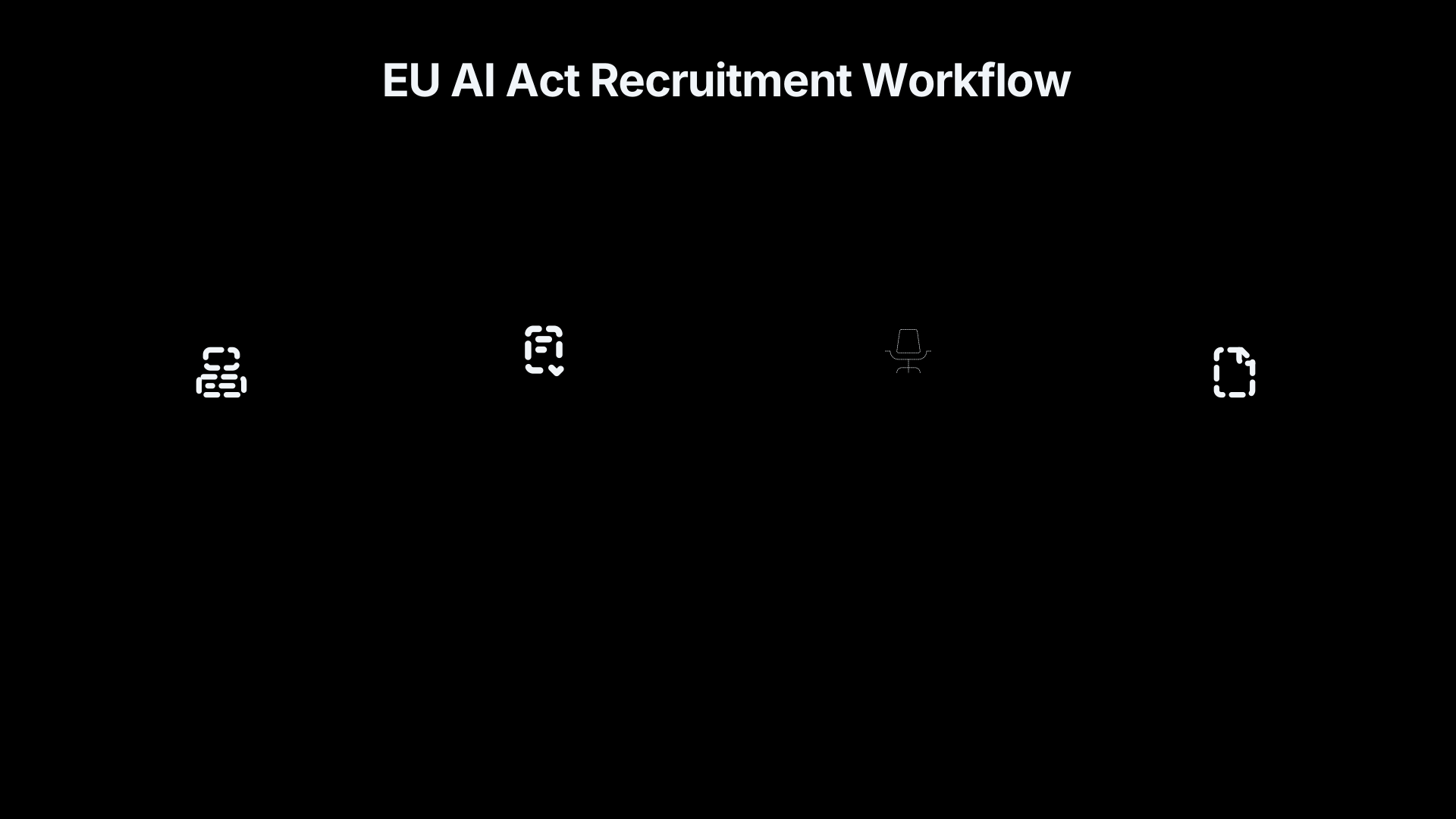
Many hiring systems are designed to save time by processing large numbers of applications. They may identify keywords, score CVs, match candidates against job descriptions, analyse assessments, or prioritise applicants for human review. Although these systems often operate at an early stage of recruitment, they can have major downstream effects.
A candidate filtered out by an automated screening tool may never reach a human recruiter. Likewise, an algorithm that ranks applicants can shape which individuals receive interviews and which remain unseen. This practical influence is one reason employment-related AI appears prominently in high-risk regulatory categories. The EU AI Act specifically identifies AI systems used to analyse and filter job applications, evaluate candidates, or support recruitment and selection decisions as high-risk uses. AI Act Service Desk+2Artificial Intelligence Act[ai-act-service-desk.ec.europa.eu]ai-act-service-desk.ec.europa.euAI Act Service DeskAI Act Service Desk - Annex III - European Union(a)AI systems intended to be used for the recruitment or selection of…
The rationale is straightforward: employment decisions affect fundamental life opportunities. Unlike a music recommendation system or advertising optimiser, a hiring algorithm can alter access to work, income, professional advancement, and long-term economic security. Regulators therefore view recruitment as a domain where errors deserve stronger scrutiny.[Digital Strategy Europe]digital-strategy.ec.europa.euDigital Strategy Europe AI Act | Shaping Europe's digital futureThe AI Act is part of a wider package of policy measures…Read more…
Why bias and error matter more in recruitment
Small technical choices can create large social effects
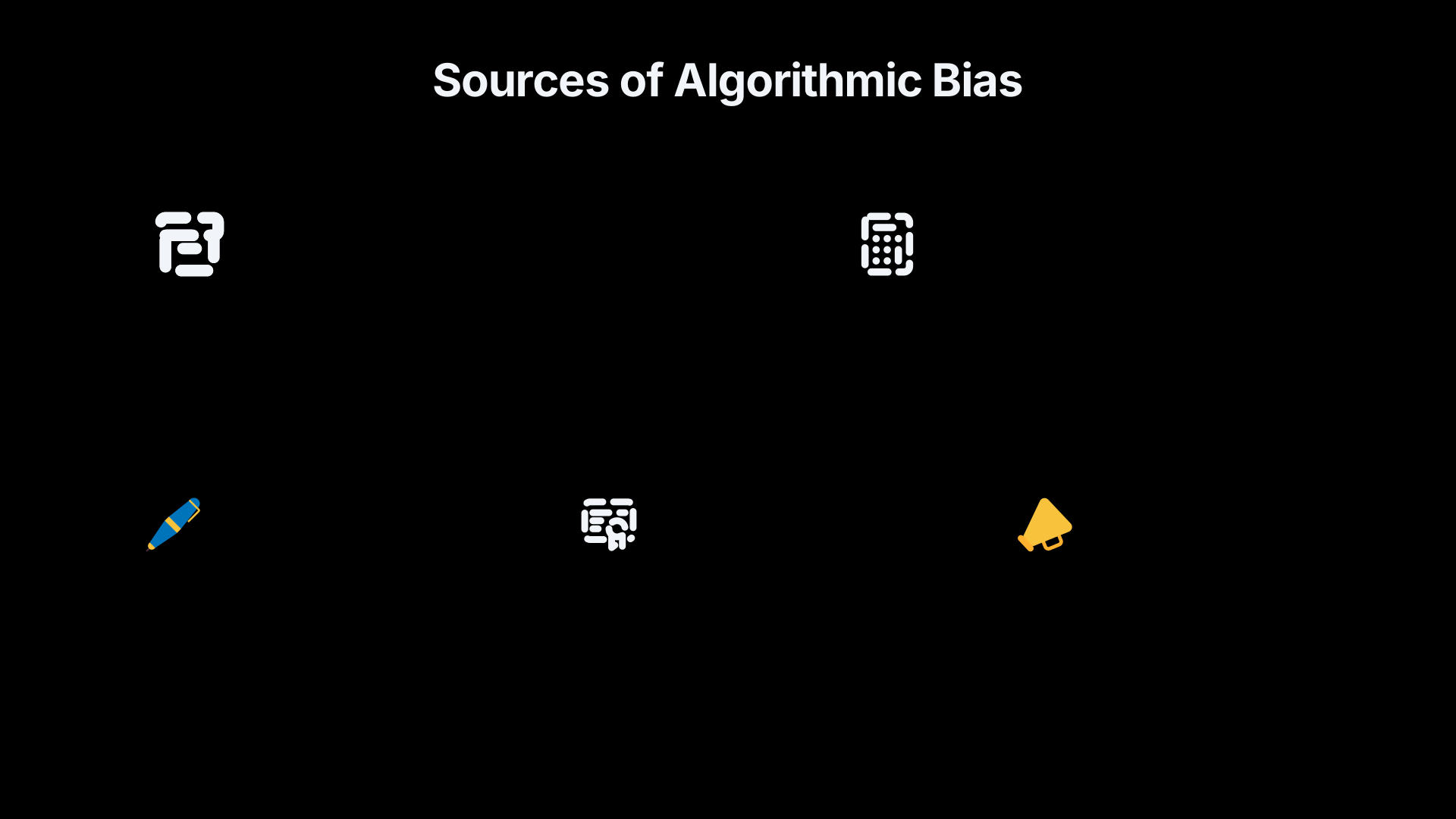
Hiring algorithms are often trained on historical data or designed around patterns observed in previous recruitment outcomes. If historical hiring practices reflected biases or structural inequalities, those patterns can be reproduced by automated systems.
Researchers, regulators, and employment-law bodies have repeatedly warned that automated selection systems can produce disparate outcomes for protected groups, even when explicit discrimination is absent. The US Equal Employment Opportunity Commission (EEOC) has emphasised that AI-assisted employment tools may violate anti-discrimination laws if they create unjustified adverse impacts on groups protected by employment legislation.[EEOC+2EEOC]eeoc.gov20240429 What is the EEOCs role in AIWhat is the EEOC's role in AI?29 Apr 2024 — While AI and other technology may offer benefits, there is potential to violate the laws…
This risk is not limited to deliberate discrimination. Problems can emerge through:
- Training data that reflects past hiring preferences.
- Proxy variables that indirectly correlate with protected characteristics.
- Assessment methods that disadvantage certain disabilities.
- Ranking systems that systematically favour particular educational or career backgrounds.
- Automated scoring methods that are difficult to interpret or challenge.[EEOC+2Renne Public Law Group]eeoc.gov20240429 What is the EEOCs role in AIWhat is the EEOC's role in AI?29 Apr 2024 — While AI and other technology may offer benefits, there is potential to violate the laws…
Scale amplifies mistakes
Human recruiters can make biased decisions, but automated systems can apply the same flawed logic across thousands of applicants. A small design problem may therefore affect large populations before anyone notices.
This scaling effect is one of the key reasons recruitment AI attracts regulatory attention. A narrow system that processes tens of thousands of applications can potentially influence more employment outcomes than an individual hiring manager. High-risk classification reflects this potential for widespread impact rather than the sophistication of the underlying software.[Pinsent Masons]pinsentmasons.comguide to high risk ai systems under the eu ai actPinsent MasonsA guide to high-risk AI systems under the EU AI Act13 Feb 2024 — Providers and deployers of so-called 'high-risk' AI system…
Why regulators treat hiring AI differently from low-stakes AI
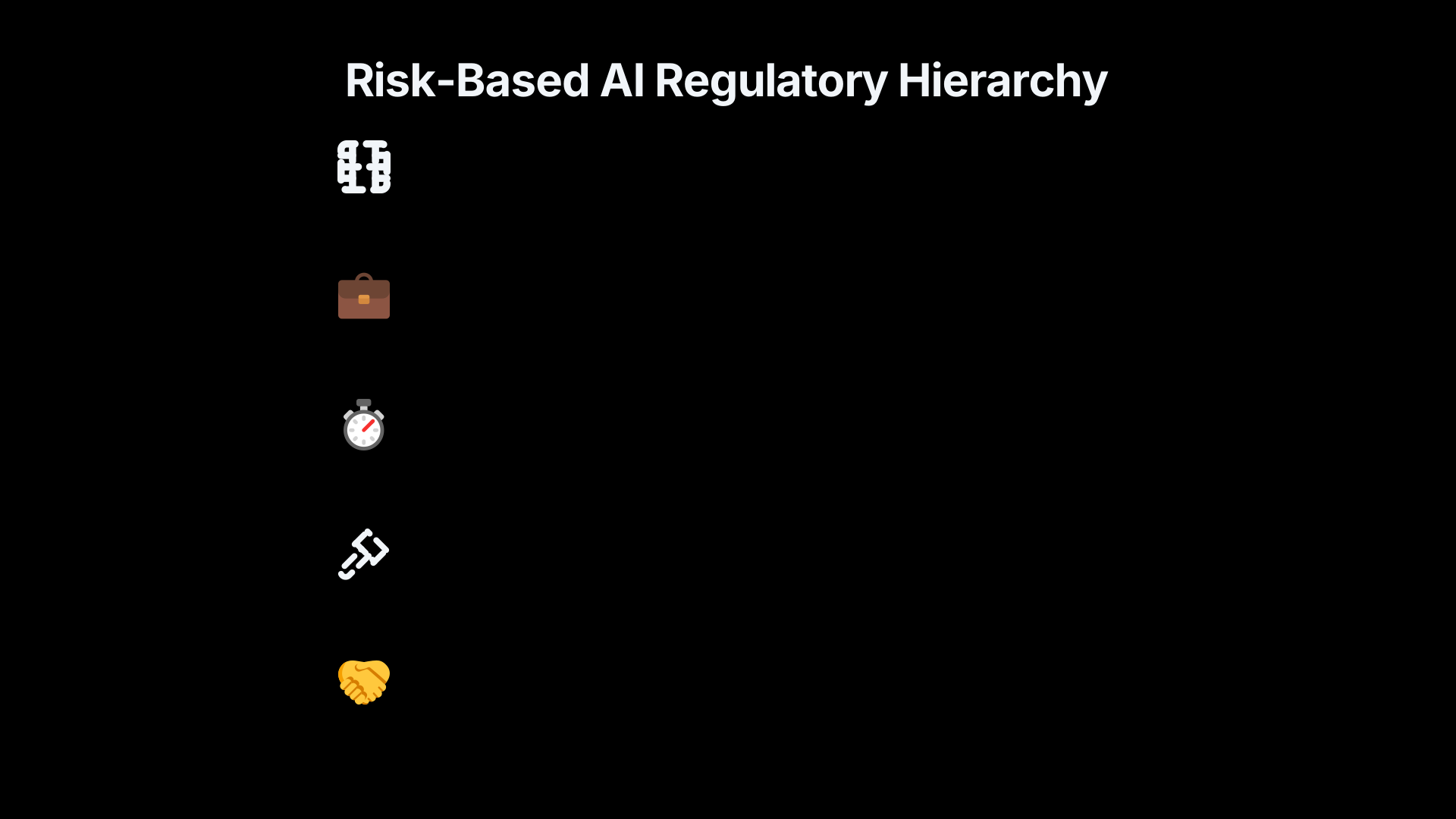
Risk-based regulation distinguishes between systems whose mistakes are inconvenient and systems whose mistakes can alter important rights or opportunities.
A recommendation engine that suggests films or songs may occasionally make poor suggestions, but the consequences are limited. By contrast, a hiring algorithm may affect whether someone obtains employment, receives an interview, or advances in a career. Regulators therefore place employment decisions alongside other sensitive areas such as education, access to essential services, and certain public-sector decisions.[Digital Strategy Europe]digital-strategy.ec.europa.euDigital Strategy Europe AI Act | Shaping Europe's digital futureThe AI Act is part of a wider package of policy measures…Read more…
The EU AI Act’s employment category covers not only candidate screening but also broader worker-management functions, including systems that influence promotion decisions, employment conditions, performance evaluation, monitoring, or termination-related assessments. The common thread is that these systems can shape important aspects of a person’s working life.[Responsible AI Platform]aiactblog.nlThe guidelines mention targeted job advertisements, filtering, candidate…Read more…
Oversight, documentation, and challenge routes
Because hiring AI can affect fundamental opportunities, high-risk rules typically focus on accountability rather than banning the technology outright.
Human oversight requirements
One major expectation is that humans remain capable of reviewing and intervening in important decisions. Regulators increasingly reject the idea that employment outcomes should be determined solely by opaque automated processes.
Human oversight requirements are intended to reduce situations where recruiters rely unquestioningly on algorithmic rankings or recommendations. Proper oversight allows employers to identify unusual outcomes, investigate potential errors, and exercise judgement when automated assessments appear questionable.[Pinsent Masons]pinsentmasons.comguide to high risk ai systems under the eu ai actPinsent MasonsA guide to high-risk AI systems under the EU AI Act13 Feb 2024 — Providers and deployers of so-called 'high-risk' AI system…
Documentation and auditability
High-risk classification also brings stronger expectations around record-keeping and documentation. Organisations may need to demonstrate how a system was developed, what data it uses, how performance was evaluated, and how risks are managed.
This documentation serves two purposes. First, it helps regulators and auditors assess compliance. Second, it makes it easier to investigate complaints or unexpected outcomes. If an applicant claims that an automated tool unfairly influenced a recruitment decision, organisations should be able to explain the system’s role and provide evidence of testing and monitoring.[Pinsent Masons+2AI Act Service Desk]pinsentmasons.comguide to high risk ai systems under the eu ai actPinsent MasonsA guide to high-risk AI systems under the EU AI Act13 Feb 2024 — Providers and deployers of so-called 'high-risk' AI system…
Routes for challenge and review
A recurring concern with algorithmic hiring is that rejected applicants may not know how decisions were made. High-risk approaches therefore emphasise transparency, accountability, and mechanisms through which people can question or challenge outcomes.
The goal is not necessarily to reveal every technical detail of a model. Instead, it is to ensure that individuals are not left without meaningful recourse when automated systems influence important employment decisions. Employment regulators have similarly stressed that organisations remain responsible for hiring outcomes even when they rely on third-party AI vendors.[Harris Beach Murtha+2Seyfarth Shaw - Homepage]harrisbeachmurtha.comHarris Beach MurthaEEOC Issues New Guidance on Use of Artificial…Where an AI selection tool results in disparate impact, an employer m…
The key lesson from hiring AI
Hiring algorithms demonstrate why narrow AI systems can still fall under strict regulatory regimes. A recruitment tool may only rank CVs, score assessments, or prioritise candidates, yet those apparently limited functions can influence who gains access to work and who does not.
For risk-based regulation, that impact is what matters. The possibility of discrimination, large-scale screening errors, reduced transparency, and limited opportunities to challenge decisions means that recruitment AI is widely viewed as a high-stakes application. As a result, hiring systems often trigger high-risk AI rules not because they are especially intelligent, but because they operate where mistakes can have lasting consequences for people’s careers and livelihoods. AI Act Service Desk+2Artificial Intelligence Act[ai-act-service-desk.ec.europa.eu]ai-act-service-desk.ec.europa.euAI Act Service DeskAI Act Service Desk - Annex III - European Union(a)AI systems intended to be used for the recruitment or selection of…
Amazon book picks
Further Reading
Books and field guides related to Why hiring AI gets stricter rules. Use these as the next step if you want deeper reading beyond the article.
Automating Inequality
Explores how automated systems affect opportunities and fairness.
eBay marketplace picks
Marketplace Samples
Example marketplace items related to this page. Use the search link to explore similar finds on eBay.



Endnotes
1.
Source: eeoc.gov
Title: 20240429 What is the EEOCs role in AI
Link:https://www.eeoc.gov/sites/default/files/2024-04/20240429_What%20is%20the%20EEOCs%20role%20in%20AI.pdf
Source snippet
What is the EEOC's role in AI?29 Apr 2024 — While AI and other technology may offer benefits, there is potential to violate the laws...
2.
Source: eeoc.gov
Title: launches initiative artificial intelligence and algorithmic fairness
Link:https://www.eeoc.gov/newsroom/eeoc-launches-initiative-artificial-intelligence-and-algorithmic-fairness
Source snippet
EEOC Launches Initiative on Artificial Intelligence and...28 Oct 2021 — Agency Will Focus on Ways to Help Ensure That Tech Tools Used in...
3.
Source: seyfarth.com
Link:https://www.seyfarth.com/news-insights/eeoc-issues-technical-assistance-guidance-on-the-use-of-advanced-technology-tools-including-artificial-intelligence.html
Source snippet
Seyfarth Shaw - HomepageEEOC Issues Technical Assistance Guidance On The Use...May 19, 2566 BE — The EEOC suggests that employers must...
Published: May 19, 2566
4.
Source: eeoc.gov
Title: 20240429 Employment Discrimination and AI for Workers
Link:https://www.eeoc.gov/sites/default/files/2024-04/20240429_Employment%20Discrimination%20and%20AI%20for%20Workers.pdf
Source snippet
Employment Discrimination and AI for Workers29 Apr 2024 — If you think you have faced discrimination due to an employer's use of AI or ot...
5.
Source: eeoc.gov
Link:https://www.eeoc.gov/es
Source snippet
Aprenda más.Read more...
6.
Source: eeoc.gov
Link:https://www.eeoc.gov/eeoc-disability-related-resources/artificial-intelligence-and-ada
Source snippet
gin Discrimination · Pregnancy Discrimination · Race/Color...Read more...
7.
Source: digital-strategy.ec.europa.eu
Title: Digital Strategy Europe AI Act | Shaping Europe’s digital future
Link:https://digital-strategy.ec.europa.eu/en/policies/regulatory-framework-ai
Source snippet
The AI Act is part of a wider package of policy measures...Read more...
8.
Source: artificialintelligenceact.eu
Link:https://artificialintelligenceact.eu/annex/3/
Source snippet
Artificial Intelligence ActAnnex III: High-Risk AI Systems Referred to in Article 6(2)This Annex lists [use cases]({{ 'use-cases/' | relative_url }}) that would qualify an AI...
9.
Source: ai-act-service-desk.ec.europa.eu
Link:https://ai-act-service-desk.ec.europa.eu/en/ai-act/annex-3
Source snippet
AI Act Service DeskAI Act Service Desk - Annex III - European Union(a)AI systems intended to be used for the recruitment or selection of...
10.
Source: artificialintelligenceact.eu
Link:https://artificialintelligenceact.eu/article/6/
Source snippet
Article 6: Classification Rules for High-Risk AI SystemsAI systems of the types listed in Annex III are always considered high-risk, unle...
11.
Source: rennepubliclawgroup.com
Link:https://rennepubliclawgroup.com/eeoc-provides-guidance-on-assessing-the-adverse-impact-of-artificial-intelligence-in-employment-selection-procedures/
Source snippet
EEOC Provides Guidance on Assessing the Adverse...Jul 24, 2566 BE — The guidance emphasizes that employers must be mindful of the potent...
12.
Source: harrisbeachmurtha.com
Link:https://www.harrisbeachmurtha.com/insights/eeoc-issues-new-guidance-on-use-of-artificial-intelligence-in-employment-selection-procedures/
Source snippet
Harris Beach MurthaEEOC Issues New Guidance on Use of Artificial...Where an AI selection tool results in disparate impact, an employer m...
13.
Source: pinsentmasons.com
Title: guide to high risk ai systems under the eu ai act
Link:https://www.pinsentmasons.com/out-law/guides/guide-to-high-risk-ai-systems-under-the-eu-ai-act
Source snippet
Pinsent MasonsA guide to high-risk AI systems under the EU AI Act13 Feb 2024 — Providers and deployers of so-called 'high-risk' AI system...
14.
Source: aiactblog.nl
Link:https://www.aiactblog.nl/en/annex-iii/werkgelegenheid-personeelsbeheer
Source snippet
The guidelines mention targeted job advertisements, filtering, candidate...Read more...
15.
Source: digital-strategy.ec.europa.eu
Title: guidelines ai high risk systems
Link:https://digital-strategy.ec.europa.eu/en/policies/guidelines-ai-high-risk-systems
Source snippet
Digital Strategy EuropeGuidelines for providers and deployers of AI high-risk systems19 May 2026 — The guidelines clarify the classificat...
Published: May 2026
16.
Source: ai-act-service-desk.ec.europa.eu
Link:https://ai-act-service-desk.ec.europa.eu/en/ai-act/article-71
Source snippet
AI Act Service DeskEU database for high-risk AI systems listed in Annex IIIThis article describes the establishment and maintenance of an...
17.
Source: artificialintelligenceact.eu
Link:https://artificialintelligenceact.eu/high-level-summary/
Source snippet
summary of the AI ActEmployment, workers management and access to self-employment: AI systems used for recruitment or selection, particul...
18.
Source: ai-act-service-desk.ec.europa.eu
Link:https://ai-act-service-desk.ec.europa.eu/en/guideline-explorer
Source snippet
on the classification of high-risk AI systems(1) The Artificial Intelligence Act (the 'AI Act'), which entered into force on 1 August 202...
19.
Source: autoriteitpersoonsgegevens.nl
Title: eu ai act
Link:https://www.autoriteitpersoonsgegevens.nl/en/themes/algorithms-ai/eu-ai-act
Source snippet
9 Apr 2025 — The EU AI Act is intended to ensure that everyone across Europe can rest assured that AI systems are secure and that fundame...
20.
Source: aiactblog.nl
Title: high risk ai employment
Link:https://www.aiactblog.nl/en/posts/high-risk-ai-employment
Source snippet
High-Risk AI in Employment and Worker Management20 May 2026 — Domain 4 of Annex III AI Act covers AI systems for recruitment and selectio...
Published: May 2026
21.
Source: aiactblog.nl
Title: recruitment selection
Link:https://www.aiactblog.nl/en/annex-iii/werkgelegenheid-personeelsbeheer/recruitment-selection
Source snippet
If an AI system is high-risk under Annex III, classification and evidence should be linked to the relevant obligations...Read more...
Additional References
22.
Source: knowlee.ai
Link:https://www.knowlee.ai/glossary/annex-iii-ai-act
Source snippet
Annex III AI Act — High-Risk AI Use Cases ReferenceAnnex III AI Act lists the eight categories of high-risk AI use cases under EU Regulat...
23.
Source: euairisk.com
Link:https://euairisk.com/resources/eu-ai-act-high-risk-classification-guide
Source snippet
Complete Guide to EU AI Act High-Risk ClassificationThe Annex III list represents the most straightforward classification path, explicitl...
24.
Source: verifywise.ai
Link:https://verifywise.ai/ai-governance-library/sector-specific-governance/eeoc-ai-employment-guidance
Source snippet
EEOC Guidance on AI in Employment DecisionsThis guidance fundamentally shifts how employers must think about AI hiring tools from "does i...
25.
Source: tuckerellis.com
Link:https://www.tuckerellis.com/alerts/eeoc-issues-guidance-for-use-of-ai-in-employment-selection-procedures/pdf/
Source snippet
EEOC Issues Guidance for Use of AI in Employment...The guidance advises that if an algorithmic decision-making tool has a disparate impa...
26.
Source: bundesnetzagentur.de
Link:https://www.bundesnetzagentur.de/EN/Areas/Digitalisation/AI/09_HighRisk/start.html
Source snippet
High-risk AI systemsThe AI system is considered to be a high-risk AI system if it is used in any of the areas listed in Annex III for any...
27.
Source: linkedin.com
Link:https://www.linkedin.com/pulse/eu-ai-act-hr-why-recruitment-tools-your-highest-risk-systems-viney-mycqe
Source snippet
EU AI Act and HR: Why Recruitment Tools Are Your...Under Annex III, the following are explicitly classified as high-risk: AI use...
28.
Source: huschblackwell.com
Link:https://www.huschblackwell.com/newsandinsights/ai-and-workplace-discrimination-what-employers-need-to-know-after-the-eeoc-and-dol-rollbacks
Source snippet
AI and Workplace Discrimination: What Employers Need to...Feb 7, 2025 — Employers must ensure that decision-making that involves the use...
29.
Source: vedder.com
Link:https://www.vedder.com/insights-events/possible-bias-in-ai-selectivity-eeoc-issues-guidance-on-use-of-artificial-intelligence-in-employment-selection-procedures/
Source snippet
guidance on the use of AI in employment selection proceduresUsing AI to screen, promote and select candidates for termination falls withi...
30.
Source: mayerbrown.com
Link:https://www.mayerbrown.com/en/insights/publications/2023/07/eeoc-issues-title-vii-guidance-on-employer-use-of-ai-other-algorithmic-decisionmaking-tools
Source snippet
The EEOC's AI Disparate Impact Guidance makes clear that the EEOC treats employer use of algorithmic decision-making tools...Read more...
31.
Source: transcrypts.com
Link:https://www.transcrypts.com/hr-resources/compliance/ai-hiring-tools-and-discrimination-navigating-the-eeoc-s-latest-compliance-guidance
Source snippet
AI Hiring Tools and Discrimination: Navigating the EEOC's...26 Nov 2025 — The Uniform Guidelines on Employee Selection Procedures (UGESP)...
Topic Tree