Within AI Sense
Where AI Actually Helps
AI is most useful when it handles a defined task, produces checkable output, and fits into a real human workflow.
On this page
- Search, translation, fraud, and navigation
- Drafting, summarising, and coding assistance
- Why checkable workflows matter
Page outline Jump by section
Introduction
Everyday AI is most useful when it is not treated as magic, but as a task helper: it sorts, predicts, drafts, translates, flags, routes, or summarises something that a person can then check. That is why many of the most successful uses of artificial intelligence are almost invisible. Search engines rank and summarise information, translation tools turn unfamiliar text into usable language, banks score transactions for fraud risk, and navigation apps predict traffic before a driver reaches it. Newer generative AI tools add drafting, summarising, coding and brainstorming assistance, but the same rule still applies: the best results come from defined tasks, clear context, and human review. AI helps most when its output is testable against a source, a route, a transaction, a policy, a codebase, or a user’s real goal.
Search, Translation, Fraud and Navigation
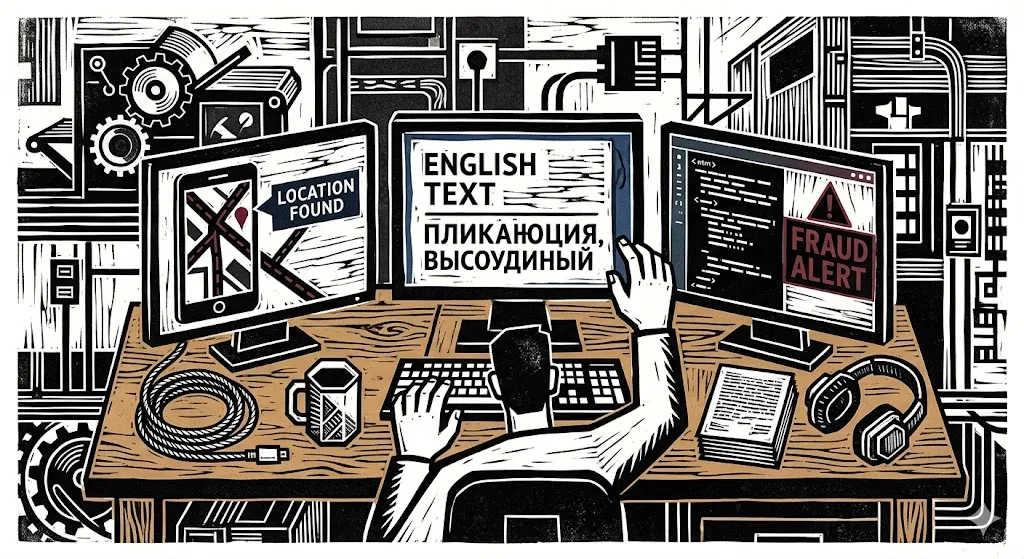
AI often feels new because of chatbots, but ordinary digital life has relied on AI-like pattern recognition for years. The difference is that many older uses are embedded inside services rather than presented as a conversation. They do not ask the user to “prompt” a system; they simply offer a result.
In search, AI is used to infer what a query means, rank likely answers, and increasingly generate summaries. Google describes AI Overviews as AI-generated snapshots intended to help users find information faster, with links for deeper checking. That convenience is real, but it changes the user’s job: instead of comparing a page of search results, the user is often assessing a generated answer that may blend multiple sources. A 2026 measurement study of Google AI Overviews found that they appeared for 13.7% of trending queries overall and 64.7% of question-form queries, while 11.0% of the atomic claims in the responses were unsupported by the cited pages. The lesson for everyday use is not “avoid AI search”, but “treat summaries as starting points, not final proof”.[Google Help]support.google.comLearn how data helps Google…Read more…
Translation is a clearer example of AI doing a bounded task. Neural machine translation does not simply replace one word with another; it uses learned patterns from large translation datasets to produce fluent target-language text. Google’s neural machine translation work, introduced in 2016, reported large error reductions compared with its older phrase-based system, while Google Cloud’s current translation documentation describes neural machine translation as able to translate to and from many languages in real time. For a traveller, student, customer-service worker or family member, the value is practical: AI can make unfamiliar text immediately usable. The checkable workflow is also obvious: for casual use, the user can compare the translation with context; for legal, medical or literary text, a human translator or subject expert is still needed.[arXiv]arxiv.orgGoogle's Neural Machine Translation System: Bridging the Gap between Human and Machine TranslationSeptember 26, 2016…
Fraud detection shows AI working as a decision-support filter rather than a public-facing assistant. Payment networks and banks use machine learning to compare a transaction with patterns of normal and suspicious behaviour, then assign a risk score or trigger extra checks. Mastercard describes its Decision Intelligence system as using advanced analytics and AI to assess transaction risk in real time, while Visa says AI and machine learning are used to reduce fraud and false declines across digital payments. In 2023, Visa said it prevented 80 million fraudulent transactions worth $40 billion, using advanced technology including AI.[Mastercard+2Visa Corporate]mastercard.comDecision Intelligence for Fraud and Risk Management Explore how Decision Intelligence uses advanced analytics and AI to improve fraud detMastercardDecision Intelligence for Fraud and Risk ManagementExplore how Decision Intelligence uses advanced analytics and AI to improve…
This case also shows why AI decisions should rarely be left entirely unexplained. A fraud model that blocks a stolen-card purchase is valuable; a model that wrongly blocks a genuine customer without a clear path to review creates frustration and possible unfairness. UK Finance has highlighted federated learning as one way financial institutions can learn from shared fraud patterns without pooling customer data, but fraud prevention still depends on governance, appeals, monitoring and human escalation when a high-impact decision affects a person’s money.[UK Finance]ukfinance.org.ukhow federated learning strengthens fraud detection in 2025how federated learning strengthens fraud detection in 2025
Navigation is another familiar AI use case because the output is continuously tested against reality. Google has explained that Maps uses live traffic information and prediction to estimate conditions and determine routes, while later AI features use Gemini and geospatial data to support more conversational route planning and location recommendations. The system’s advice is useful because it is tied to concrete constraints: time, distance, traffic, tolls, road closures, walking routes, parking, and the user’s destination. A driver or pedestrian can judge whether the recommendation fits the visible world.[blog.google]blog.googleOpen source on blog.google.
Drafting, Summarising and Coding Assistance
Generative AI has made everyday AI more visible because it produces words, code and plans in response to natural language. The most common practical uses are not science-fiction scenarios, but small workflow accelerators: drafting an email, turning notes into a summary, creating first-pass code, explaining an error message, restructuring a document, or producing alternative phrasings.
For writing and summarising, the advantage is speed at the blank-page stage. An AI system can turn rough notes into a polite message, produce a meeting recap, suggest headings, or condense a long document into a shorter brief. The risk is that fluent text can disguise gaps. A summary may omit a caveat; a draft may sound more confident than the evidence allows; a citation may be wrong or invented. That is why AI writing works best when the user can compare the output with the original material, edit the tone, and check any factual or legal claims before sending.
Workplace adoption reflects this tension. McKinsey’s 2025 workplace report found that almost all companies were investing in AI, but only 1% believed they had reached maturity. Its later 2025 global survey reported that organisations gaining more value were more likely to have defined processes for deciding when AI outputs need human validation. In practical terms, the difference between casual experimentation and useful deployment is not just access to a chatbot; it is knowing which tasks are safe to automate, which need review, and which should remain human-led.[McKinsey & Company]mckinsey.comOpen source on mckinsey.com.
Coding assistants are a useful warning against simplistic “AI always boosts productivity” claims. A 2026 meta-analysis of 23 studies found a statistically significant but moderate positive effect of generative AI on programming productivity, with larger gains in controlled settings and smaller effects in open-source and enterprise contexts. A 2025 systematic review similarly found benefits such as faster development and less code search, but also concerns about cognitive offloading, inconsistent code quality and limited long-term evaluation.[arXiv]arxiv.orgOpen source on arxiv.org.
The practical lesson is that coding help is strongest when the output is easy to test: writing boilerplate, explaining unfamiliar syntax, producing small functions, generating tests, drafting documentation, or suggesting debugging paths. It is weaker when the assistant must understand a large, messy, security-sensitive codebase. In a 2025 randomised controlled trial by METR, experienced open-source developers working on familiar repositories took 19% longer when using AI tools, partly because they spent time reviewing and correcting outputs. That does not make coding assistants useless; it shows that the review burden can outweigh the generation speed when the task is complex and the user already has strong domain knowledge.[Metr]metr.org2025 07 10 early 2025 ai experienced os dev study2025 07 10 early 2025 ai experienced os dev study
Where AI Supports Decisions Without Replacing Judgement
The most valuable everyday AI systems often do not make the final decision. They narrow options, highlight anomalies, draft possible responses, estimate risks, or expose patterns that would be slow for a person to find manually. That is decision support: the system improves the human decision environment rather than pretending to own the whole judgement.
A useful decision-support workflow usually has four parts:
- A defined task: “Summarise this document”, “flag suspicious payments”, “compare these routes”, or “suggest test cases” is more reliable than “tell me what to do”.
- A checkable output: The user can inspect the source document, transaction details, route map, code test result, or cited evidence.
- A known threshold for review: Low-risk, reversible tasks can be lightly checked; high-impact decisions need stronger review.
- A human owner: Someone remains responsible for context, trade-offs, exceptions and consequences.
This is why AI is often more helpful as a “second pair of eyes” than as an oracle. In fraud detection, the system flags risk but investigators, banks and customers may need to resolve edge cases. In navigation, the app suggests a route but the driver still accounts for road signs and safety. In search, the overview may orient the user, but the cited sources must support the claim. In coding, the assistant may propose a function, but tests, security review and maintainability still matter.
Research on human-AI decision-making increasingly points to the same problem: accuracy alone is not enough. A 2026 paper on metrics for human-AI decision-making argues that evaluation often focuses on model accuracy rather than whether human-AI teams collaborate safely, including whether people overuse AI when it is wrong or underuse it when it is helpful. In other words, a good AI tool is not only a model with a high score; it is a system that helps people rely on it at the right moments.[arXiv]arxiv.orgOpen source on arxiv.org.
Why Checkable Workflows Matter
Checkability is the difference between useful AI and risky automation. A weather summary, route suggestion, translation, transaction alert, meeting recap or code snippet can be checked against something outside the AI’s own wording. A vague strategic recommendation, invented citation, unsupported medical claim or confident legal answer may be much harder for an ordinary user to verify.
The weakness of generative AI is not only that it can be wrong. It can be wrong in a polished, plausible way. Recent research on AI-assisted data extraction found that AI performed better on concrete, explicitly stated questions and worse on questions requiring subjective interpretation or absent information. That pattern is highly relevant to everyday use: AI is safer when asked to extract, transform or draft from provided material than when asked to infer too much from missing context.[arXiv]arxiv.orgOpen source on arxiv.org.
A good everyday rule is to match the level of checking to the level of consequence. For low-stakes tasks, such as rephrasing a message or translating a restaurant menu, light review may be enough. For medium-stakes tasks, such as summarising a contract clause, preparing a work memo or editing code, the user should compare the output with the source and test any claims. For high-stakes tasks involving health, money, law, safety, employment or identity, AI should support preparation and understanding, not replace a qualified person or formal process.
This does not make AI less useful. It makes its usefulness more realistic. The strongest everyday systems save attention for the parts humans are best placed to judge: intent, values, context, exceptions, fairness and responsibility.
Practical Examples That Show the Pattern
A person planning a journey might ask a navigation app for the fastest route, then choose a slightly slower route with fewer stressful junctions. AI supplies prediction and comparison; the person supplies preference and caution.
A customer receiving a suspicious bank alert might benefit from a fraud system that detects unusual behaviour quickly, but the bank still needs a clear way to confirm identity, reverse mistakes and explain next steps. AI supplies speed; the institution supplies accountability.
A bilingual worker might use machine translation to understand a message, then ask a fluent speaker to review anything sensitive. AI supplies access; the human reviewer supplies nuance.
A programmer might ask an assistant to draft unit tests for a small function, then run the tests, inspect the edge cases and reject anything brittle. AI supplies scaffolding; the developer supplies correctness.
A manager might ask an AI tool to summarise meeting notes into actions, then compare the result with the transcript before assigning work. AI supplies compression; the manager supplies responsibility.
Across these examples, the same implementation principle holds: AI helps most when it has a narrow job, enough context, and a user who can verify the result. It helps least when it is asked to make broad, consequential judgements without evidence, oversight or a clear path for correction.
The Everyday AI Takeaway
The most durable everyday AI use cases are not the flashiest. They are the ones that fit naturally into existing human workflows: search that points back to sources, translation that can be compared with context, fraud detection that escalates suspicious activity, navigation that updates as conditions change, drafting tools that leave the user in control, and coding assistants whose output can be tested.
The practical question is not “Can AI do this?” but “Can AI do this part of the task well enough, with output I can check, inside a workflow where a human remains responsible?” When the answer is yes, AI can reduce friction, surface options and speed up routine work. When the answer is no, the same fluency that makes AI attractive can become a liability.
Amazon book picks
Further Reading
Books and field guides related to Where AI Actually Helps. Use these as the next step if you want deeper reading beyond the article.
Co-Intelligence
Explains where AI helps in real-world tasks and why human oversight matters.
eBay marketplace picks
Marketplace Samples
Example marketplace items related to this page. Use the search link to explore similar finds on eBay.




Endnotes
1.
Source: support.google.com
Link:https://support.google.com/websearch/answer/14901683?co=GENIE.Platform%3DAndroid&hl=en
Source snippet
Learn how data helps Google...Read more...
2.
Source: arxiv.org
Link:https://arxiv.org/abs/2605.14021
3.
Source: arxiv.org
Link:https://arxiv.org/abs/1609.08144
Source snippet
Google's Neural Machine Translation System: Bridging the Gap between Human and Machine TranslationSeptember 26, 2016...
Published: September 26, 2016
4.
Source: docs.cloud.google.com
Link:https://docs.cloud.google.com/translate/docs/advanced/nmt-model
Source snippet
Google Cloud DocumentationNeural Machine Translation (NMT) modelNeural Machine Translation (NMT) has evolved from the neural network tran...
5.
Source: mastercard.com
Link:https://www.mastercard.com/us/en/[business
Source snippet
Decision Intelligence for Fraud and Risk ManagementExplore how Decision Intelligence uses advanced analytics and AI to improve...
6.
Source: corporate.visa.com
Link:https://corporate.visa.com/en/solutions/visa-protect/insights/fraud-detection.html
7.
Source: blog.google
Link:https://blog.google/products-and-platforms/products/maps/google-maps-101-how-ai-helps-predict-traffic-and-determine-routes/
8.
Source: blog.google
Title: ask maps immersive navigation
Link:https://blog.google/products-and-platforms/products/maps/ask-maps-immersive-navigation/
9.
Source: mckinsey.com
Link:https://www.mckinsey.com/capabilities/tech-and-ai/our-insights/superagency-in-the-workplace-empowering-people-to-unlock-ais-full-potential-at-work
10.
Source: mckinsey.com
Title: the state of ai
Link:https://www.mckinsey.com/capabilities/quantumblack/our-insights/the-state-of-ai
11.
Source: arxiv.org
Link:https://arxiv.org/abs/2605.04779
12.
Source: arxiv.org
Link:https://arxiv.org/abs/2507.03156
13.
Source: metr.org
Title: 2025 07 10 early 2025 ai experienced os dev study
Link:https://metr.org/blog/2025-07-10-early-2025-ai-experienced-os-dev-study/
14.
Source: arxiv.org
Link:https://arxiv.org/html/2603.18895v1
15.
Source: arxiv.org
Link:https://arxiv.org/abs/2508.09458
16.
Source: blog.google
Title: found translation more accurate fluent sentences google translate
Link:https://blog.google/products-and-platforms/products/translate/found-translation-more-accurate-fluent-sentences-google-translate/
17.
Source: mckinsey.com
Title: the economic potential of generative ai the next productivity frontier
Link:https://www.mckinsey.com/capabilities/tech-and-ai/our-insights/the-economic-potential-of-generative-ai-the-next-productivity-frontier
18.
Source: cloud.google.com
Title: 101 real world generative ai use cases from industry leaders
Link:https://cloud.google.com/transform/101-real-world-generative-ai-use-cases-from-industry-leaders
19.
Source: developers.google.com
Title: ai features
Link:https://developers.google.com/search/docs/appearance/ai-features
20.
Source: mapsplatform.google.com
Link:https://mapsplatform.google.com/resources/blog/how-google-maps-platform-uses-aiml-and-community-contributions-keep-its-points-interest-date/
21.
Source: cloud.google.com
Link:https://cloud.google.com/products/ai
22.
Source: mapsplatform.google.com
Title: offer efficient routes
Link:https://mapsplatform.google.com/solutions/offer-efficient-routes/
23.
Source: developers.google.com
Link:https://developers.google.com/maps/documentation/routes
24.
Source: medium.com
Link:https://medium.com/%40maheera_amjad/machine-translation-in-nlp-how-google-translate-works-f9247d2d3249
25.
Source: arxiv.org
Link:https://arxiv.org/html/2412.06603v2
26.
Source: mastercard.com
Link:https://www.mastercard.com/content/dam/mccom/shared/business/b2b/reports/decision-intelligence-beyond-mastercard-playbook.pdf
27.
Source: search.google
Title: Google AI Mode
Link:https://search.google/ways-to-search/ai-mode/
28.
Source: ukfinance.org.uk
Title: how federated learning strengthens fraud detection in 2025
Link:https://www.ukfinance.org.uk/news-and-insight/blog/how-federated-learning-strengthens-fraud-detection-in-2025
29.
Source: businessinsider.com
Title: mastercard ai credit card fraud detection protects consumers 2025 5
Link:https://www.businessinsider.com/mastercard-ai-credit-card-fraud-detection-protects-consumers
30.
Source: fintechmagazine.com
Title: mastercard launches gen ai tool to better protect consumers
Link:https://fintechmagazine.com/articles/mastercard-launches-gen-ai-tool-to-better-protect-consumers
31.
Source: smarterway.ai
Link:https://smarterway.ai/tools/mastercard-decision-intelligence
32.
Source: ukfinance.org.uk
Title: tackling money mules machine learning
Link:https://www.ukfinance.org.uk/news-and-insight/blog/tackling-money-mules-machine-learning
33.
Source: cdomagazine.tech
Link:https://www.cdomagazine.tech/aiml/mastercard-launches-decision-intelligence-pro-new-generative-ai-model-for-fraud-detection
Additional References
34.
Source: youtube.com
Title: The best way to search for info online in the AI era | Terms of Service
Link:https://www.youtube.com/watch?v=4WgxWlcf1Xw
Source snippet
AI overviews search accuracy study google How to Dominate [AI Search]({{ 'ai-search/' | relative_url }}) Results in 2026 (ChatGPT, AI Overviews & More) Surfer Academy...
35.
Source: youtube.com
Title: How Accurate Are Google’s AI Overviews? | Listen Let Me Tell You Something
Link:https://www.youtube.com/watch?v=uHpFAMwi8vc
Source snippet
10 Use Cases for AI Agents: IoT, RAG, & Disaster Response Explained...
36.
Source: youtube.com
Title: 10 Use Cases for AI Agents: Io T, RAG, & Disaster Response Explained
Link:https://www.youtube.com/watch?v=Ts42JTye-AI
Source snippet
The best way to search for info online in the AI era | Terms of Service...
37.
Source: researchgate.net
Link:https://www.researchgate.net/publication/383264952_Artificial_intelligence_in_fraud_prevention_Exploring_techniques_and_applications_challenges_and_opportunities
38.
Source: researchgate.net
Link:https://www.researchgate.net/publication/394865117_Financial_Fraud_Detection_with_AI_A_Machine_Learning-Based_Approach_for_Securing_Digital_Transactions
39.
Source: ibm.com
Link:https://www.ibm.com/think/topics/ai-fraud-detection-in-banking
40.
Source: sift.com
Link:https://sift.com/blog/how-to-use-ai-in-fraud-detection/
41.
Source: keyrus.com
Link:https://keyrus.com/uk/en/insights/ai-and-fraud-prevention-how-financial-institutions-can-stay-ahead-in-2025
42.
Source: reuters.com
Link:https://www.reuters.com/[business/ai
43.
Source: research.google
Link:https://research.google/pubs/googles-neural-machine-translation-system-bridging-the-gap-between-human-and-machine-translation/
Topic Tree
Follow this branch
Parent topic
AI SenseRelated pages 11
- AI Errors Why AI Can Be Confidently Wrong
- AI Outputs What Counts as AI Today?
- Business Adoption Why AI Pilots Often Stall
- Deep Learning Why Layers Changed AI
- Generative AI Why Generative AI Feels Different
- Language Models Why Chatbots Sound So Fluent
- Machine Learning How Machines Learn From Examples
- Narrow vs AGI Is Today’s AI Actually General?
- +3 more in sidebar