Within Responsible AI
When human oversight becomes rubber stamping
Human review only protects people when reviewers have enough time, authority and evidence to challenge the machine.
On this page
- Why algorithmic advice can anchor human judgement
- What real intervention power looks like
- Appeals, overrides and incident reporting in practice
Page outline Jump by section
Introduction
Human oversight is often presented as the answer to the risks of artificial intelligence in areas such as healthcare, hiring, policing, welfare, credit and critical infrastructure. Yet simply placing a person somewhere in the workflow does not guarantee protection. In many high-risk systems, humans end up approving machine recommendations with little scrutiny, turning oversight into a procedural formality rather than a genuine safeguard.
 Meaningful human oversight requires more than a “human in the loop”. Reviewers need enough time, authority, information and independence to challenge the system when necessary. Modern AI governance frameworks increasingly recognise this distinction. The key question is not whether a human sees the output, but whether that human can realistically detect mistakes, question assumptions, override decisions and trigger corrective action when harm may occur.[aiattest.io+2Artificial Intelligence Act]aiattest.ioE U AI Act Article 14 — Human Oversight | Compliance Requirements | AI AttestE U AI Act Article 14 — Human Oversight | Compliance Requirements | AI Attest
Why algorithmic advice can anchor human judgement
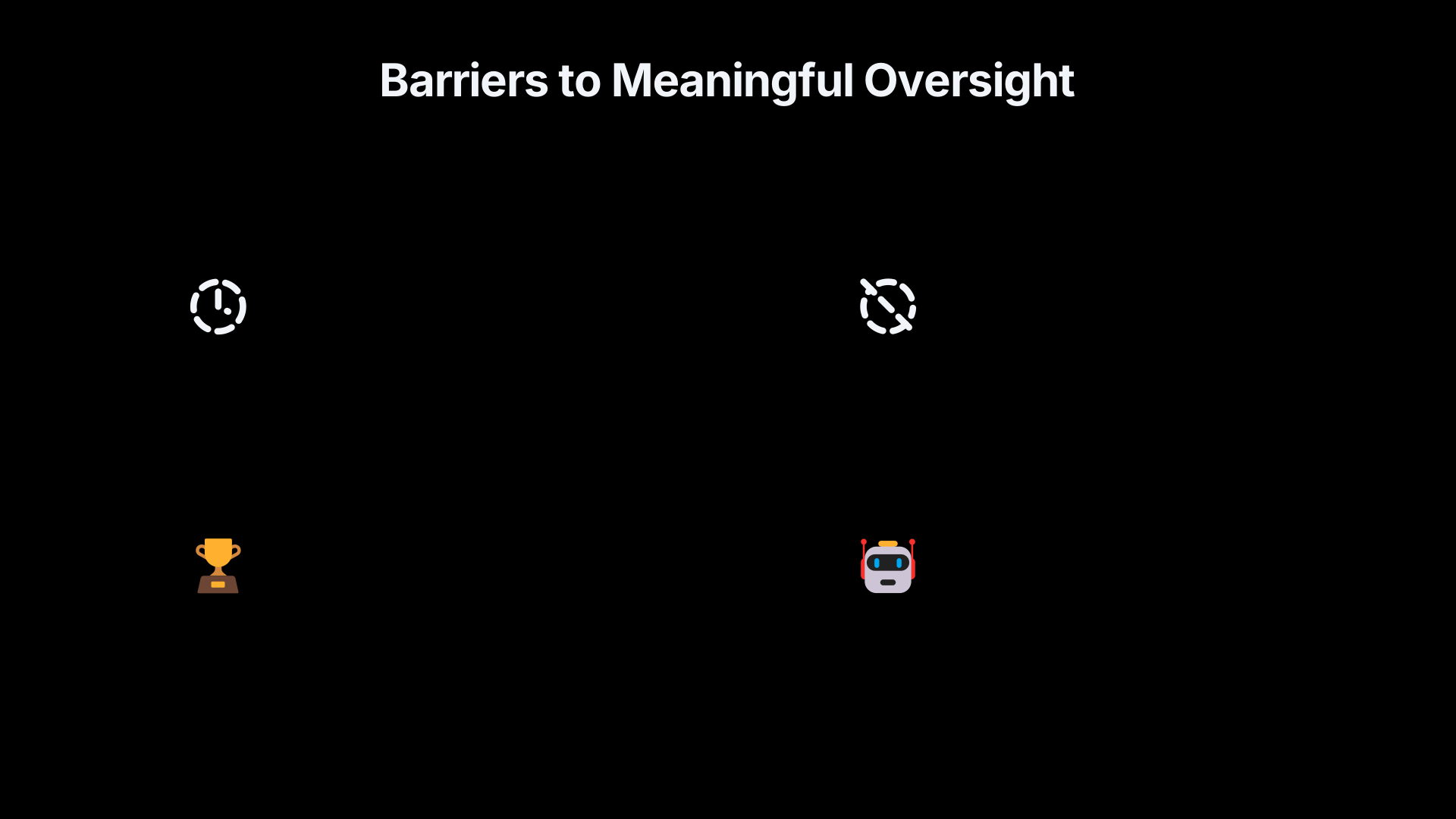
One of the biggest weaknesses in human oversight is a phenomenon known as automation bias. People often give excessive weight to recommendations generated by automated systems, particularly when those systems appear sophisticated or have performed well in the past.
This creates a paradox. Organisations may add human review to reduce risk, yet the reviewer can become psychologically anchored by the AI’s recommendation. Instead of independently assessing a case, the reviewer starts from the assumption that the machine is probably correct and looks mainly for reasons to confirm it. Researchers and policymakers have repeatedly warned that nominal human involvement can become little more than rubber-stamping if system design encourages deference rather than critical evaluation.[sota.io]sota.ioeu ai act art14 human oversight foundations high risk ai developer guide 2026EU AI Act Art.14 Human Oversight: Foundations for High-Risk AI Developers (2026) — sota.io BlogJune 10, 2026…
Several factors make this problem worse:
- High workload: Reviewers handling hundreds of cases per day are unlikely to investigate each recommendation deeply.
- Information asymmetry: The AI may display a conclusion without showing the evidence, uncertainty or limitations behind it.
- Performance pressure: Staff may be rewarded for speed and consistency rather than independent judgement.
- Perceived authority: Users often assume complex statistical systems are more objective than human judgement, even when evidence for that assumption is weak.
The result is that a human signature on a decision does not necessarily mean a meaningful review occurred. Oversight becomes ineffective when humans are technically present but practically unable to disagree.
What real intervention power looks like
For oversight to matter, humans must possess genuine decision-making authority rather than symbolic participation.
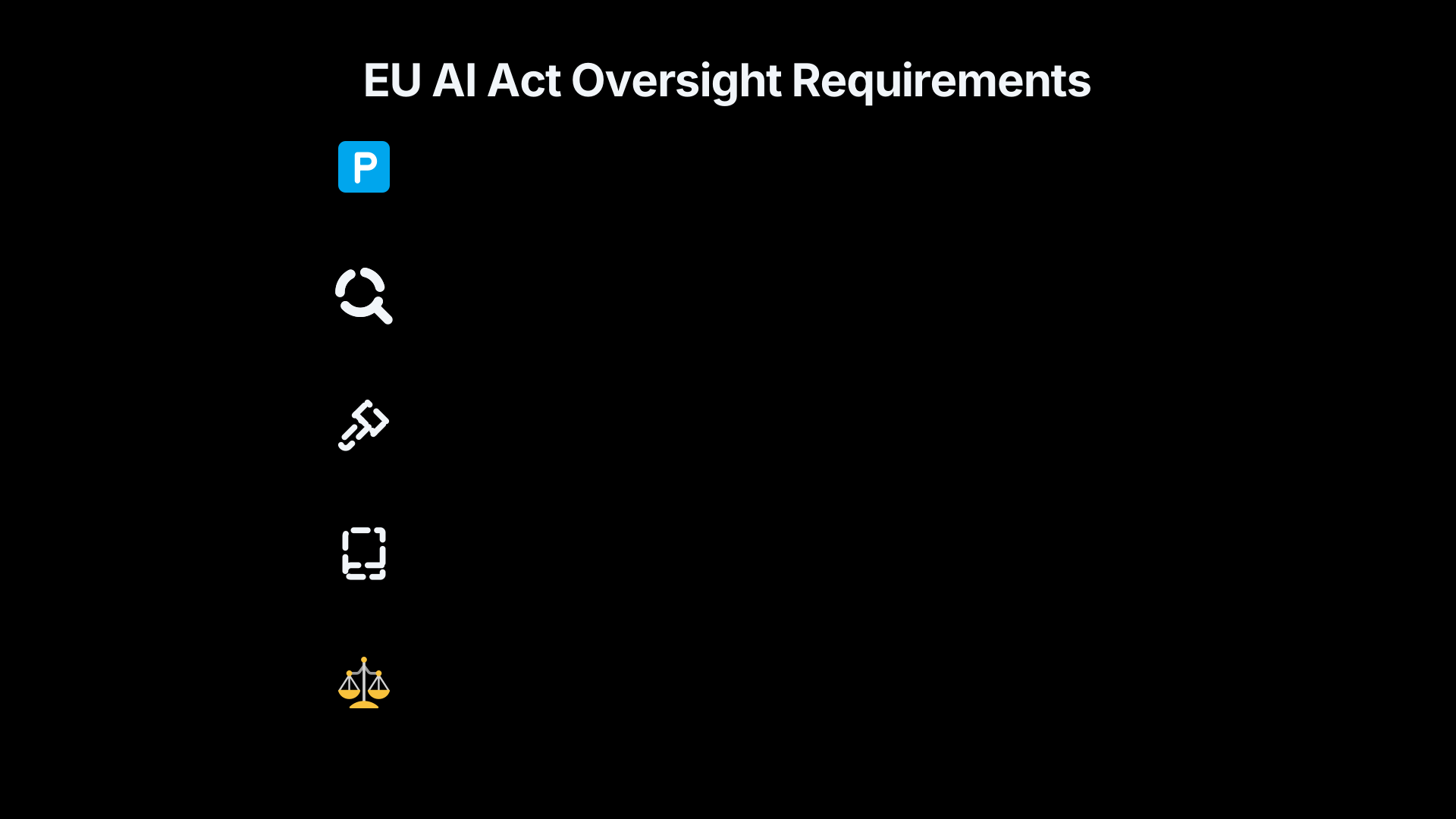
Recent regulatory approaches, including requirements for high-risk AI systems in the European Union, emphasise that human overseers should understand system capabilities and limitations, correctly interpret outputs, disregard recommendations when appropriate and intervene to stop or override system operation when necessary. Oversight measures are expected to be proportionate to the risks involved.[Artificial Intelligence Act+2EU AI Act]artificialintelligenceact.euOpen source on artificialintelligenceact.eu.
In practice, meaningful intervention power usually requires several conditions.
Access to evidence rather than conclusions alone. Reviewers need to see the factors influencing the recommendation, relevant contextual information and indicators of uncertainty. A score without supporting information makes independent judgement difficult.[sota.io]sota.ioeu ai act art14 human oversight foundations high risk ai developer guide 2026EU AI Act Art.14 Human Oversight: Foundations for High-Risk AI Developers (2026) — sota.io BlogJune 10, 2026…
Authority to reject outputs. If organisational culture punishes staff for disagreeing with the system, formal override powers become meaningless. Effective oversight requires explicit permission and support to depart from automated recommendations.[Sage Journals]journals.sagepub.comSage JournalsProceduralizing control and discretion: Human oversight in artificial intelligence policy - Riikka Koulu, 2020…
Adequate time for review. Human review cannot function as a safeguard if reviewers are expected to process cases so quickly that investigation becomes impossible.
Training on failure modes. Reviewers must understand where the system is likely to be unreliable. Knowing typical error patterns is often more valuable than understanding every technical detail of the underlying model. The EU’s human oversight requirements specifically emphasise awareness of system limitations and the risks of over-reliance.[Artificial Intelligence Act]artificialintelligenceact.euOpen source on artificialintelligenceact.eu.
Emergency intervention mechanisms. High-risk systems should include practical ways to halt, interrupt or safely disable operation when dangerous behaviour is detected.[EU AI Act]euai-act.comOpen source on euai-act.com.
A useful test is simple: if a reviewer believes the AI is wrong, can they realistically stop the decision and have that challenge respected? If not, oversight is unlikely to provide meaningful protection.
Appeals, overrides and incident reporting in practice
Even well-designed oversight can miss errors. For that reason, meaningful human oversight extends beyond the moment of decision.
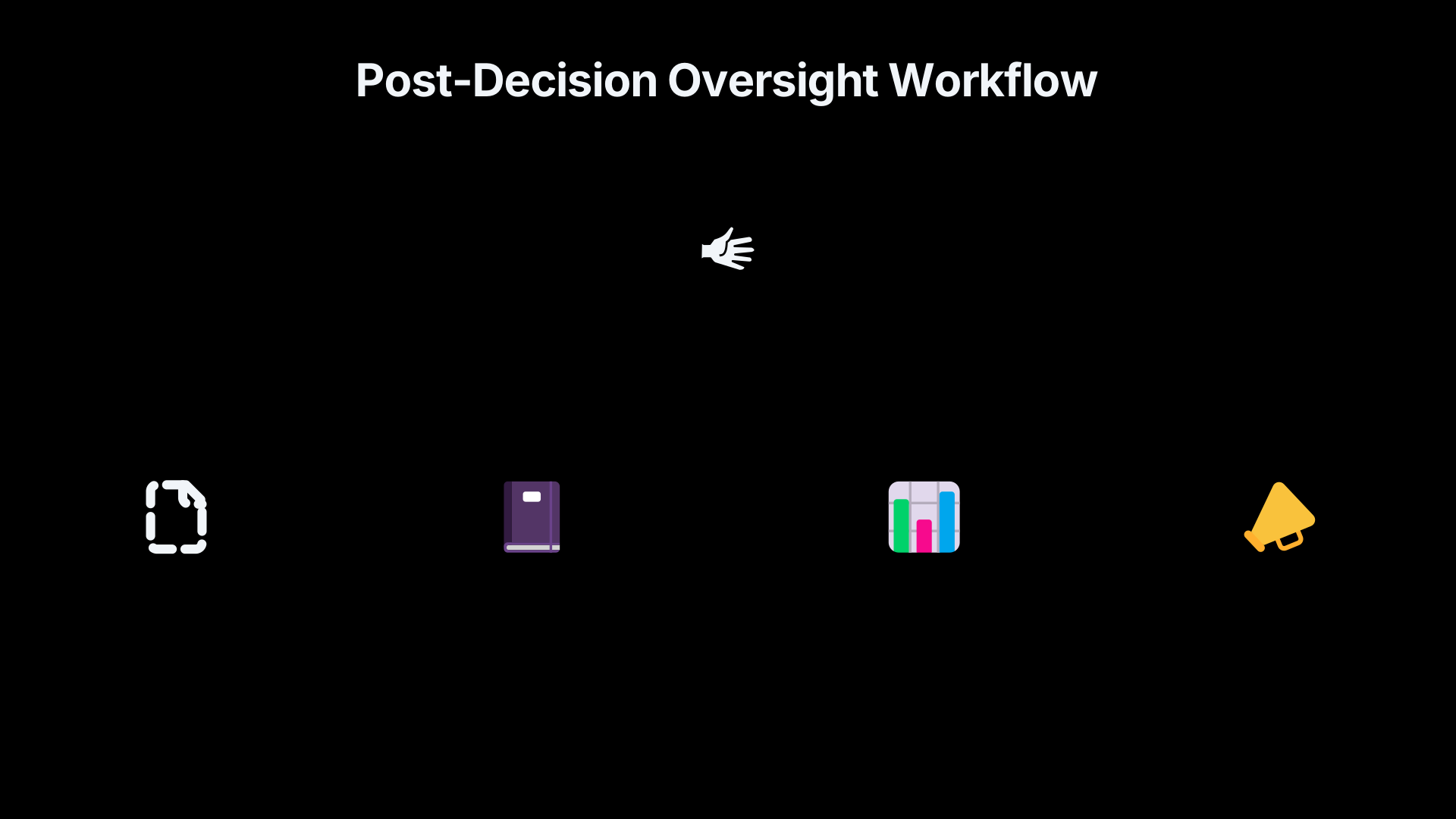
People affected by high-risk AI systems need accessible routes to challenge outcomes. Appeals processes allow errors that escaped initial review to be identified and corrected. They also create feedback that helps organisations discover systematic problems rather than isolated mistakes.
The importance of appeal mechanisms is reflected in legal and regulatory frameworks governing automated decision-making. Individuals often require a way to seek human reconsideration, provide additional information or contest decisions that significantly affect them.[ICO]ico.org.ukICORight not to be subject to automated decision-making | ICOICORight not to be subject to automated decision-making | ICO
Effective oversight systems therefore include:
- Clear procedures for requesting review.
- Documentation explaining how decisions were reached.
- Records of when recommendations were overridden.
- Monitoring of patterns in complaints and appeals.
- Escalation routes for serious incidents.
Override records are particularly valuable. If humans never disagree with an AI system, that may indicate excellent performance—or it may indicate that reviewers have become passive approvers. Tracking override rates, appeal outcomes and incident reports helps organisations distinguish between these possibilities.
Incident reporting is equally important. High-risk AI systems operate in changing environments, and problems often emerge only after deployment. Staff need straightforward ways to report suspected errors, harmful outcomes or unexpected system behaviour without fear of retaliation. Governance frameworks such as the NIST AI Risk Management Framework emphasise ongoing monitoring and risk management rather than treating deployment as the end of the process.[NIST+2Crowell & Moring - Home]nist.govai risk management frameworkAI Risk Management Framework | NISTJanuary 26, 2023…
When human oversight becomes rubber-stamping
A common misconception is that adding a human reviewer automatically solves accountability concerns. In reality, poor oversight design can create a false sense of security.
Warning signs include:
- Reviewers seeing only final recommendations.
- Decisions processed under severe time pressure.
- Lack of training on system limitations.
- No meaningful override authority.
- Appeals that rarely change outcomes.
- Organisations measuring compliance by the existence of a review step rather than its effectiveness.
Scholars of AI governance have warned that human oversight can become an “empty procedural shell” when it is treated as a symbolic requirement rather than a functioning safeguard. The presence of a human decision-maker matters only if that person retains genuine discretion and the practical ability to exercise it.[Sage Journals]journals.sagepub.comSage JournalsProceduralizing control and discretion: Human oversight in artificial intelligence policy - Riikka Koulu, 2020…
The most effective safeguard is therefore not human involvement in the abstract, but human involvement designed around real power, real information and real accountability. In high-risk AI systems, oversight protects people only when reviewers can meaningfully challenge the machine instead of merely confirming what it has already decided.[aiattest.io+2Artificial Intelligence Act]aiattest.ioE U AI Act Article 14 — Human Oversight | Compliance Requirements | AI AttestE U AI Act Article 14 — Human Oversight | Compliance Requirements | AI Attest
Amazon book picks
Further Reading
Books and field guides related to When human oversight becomes rubber-stamping. Use these as the next step if you want deeper reading beyond the article.
Thinking, Fast and Slow
Useful for understanding automation bias and judgement shortcuts.
Responsible AI in Practice
Covers operational oversight and accountability mechanisms.
eBay marketplace picks
Marketplace Samples
Example marketplace items related to this page. Use the search link to explore similar finds on eBay.




Endnotes
1.
Source: aiattest.io
Title: E U AI Act Article 14 — Human Oversight | Compliance Requirements | AI Attest
Link:https://aiattest.io/[eu-ai-act
2.
Source: sota.io
Title: eu ai act art14 human oversight foundations high risk ai developer guide 2026
Link:https://www.sota.io/blog/eu-ai-act-art14-human-oversight-foundations-high-risk-ai-developer-guide-2026
Source snippet
EU AI Act Art.14 Human Oversight: Foundations for High-Risk AI Developers (2026) — sota.io BlogJune 10, 2026...
Published: June 10, 2026
3.
Source: ico.org.uk
Title: ICORight not to be subject to automated decision-making | ICO
Link:https://ico.org.uk/for-organisations/law-enforcement/guide-to-le-processing/individual-rights/right-not-to-be-subject-to-automated-decision-making/?search=years
4.
Source: nist.gov
Title: ai risk management framework
Link:https://www.nist.gov/itl/ai-risk-management-framework
Source snippet
AI Risk Management Framework | NISTJanuary 26, 2023...
Published: January 26, 2023
5.
Source: crowell.com
Title: & Moring
Link:https://www.crowell.com/en/insights/client-alerts/nist-publishes-an-initial-draft-ai-risk-management-framework-and-guidance-to-address-bias-in-ai
Source snippet
Crowell & Moring - HomeNIST Publishes an Initial Draft AI Risk Management Framework and Guidance to Address Bias in AI | Crowell & Moring...
6.
Source: artificialintelligenceact.eu
Link:https://artificialintelligenceact.eu/ja/article/14/?wg-choose-original=false
7.
Source: journals.sagepub.com
Link:https://journals.sagepub.com/doi/abs/10.1177/1023263X20978649?mi=ehikzz
Source snippet
Sage JournalsProceduralizing control and discretion: Human oversight in artificial intelligence policy - Riikka Koulu, 2020...
8.
Source: euai-act.com
Link:https://www.euai-act.com/articles/high-risk-ai-systems-requirements
9.
Source: GOV.UK
Link:https://www.gov.uk/government/publications/the-centre-for-data-ethics-and-innovation-calls-for-evidence-on-online-targeting-and-bias-in-algorithmic-decision-making/centre-for-data-ethics-and-innovation-review-on-bias-in-algorithmic-decision-making
Additional References
10.
Source: reddit.com
Title: A lot of companies still underestimate what the EU AI Act is actually changing
Link:https://www.reddit.com/r/u_Companial/comments/1tikxs0/a_lot_of_companies_still_underestimate_what_the/
Source snippet
A lot of companies still underestimate what the EU AI Act is actually changing...
11.
Source: reddit.com
Title: www.reddit.com E U AI Act Compliance: What AI Teams Are Getting Wrong Right Now
Link:https://www.reddit.com/r/u_AnnexOps/comments/1u024ty/eu_ai_act_compliance_what_ai_teams_are_getting/
Source snippet
AI Act Compliance: What AI Teams Are Getting Wrong Right NowJune 8, 2026...
Published: June 8, 2026
12.
Source: youtube.com
Title: Module 4 High Risk AI Systems Deep Dive
Link:https://www.youtube.com/watch?v=AdSWsrqIP60
Source snippet
Module 10 Human Oversight Human in the Loop...
13.
Source: youtube.com
Title: What is Human In The Loop with AI? How HITL Shapes AI Systems
Link:https://www.youtube.com/watch?v=9iS-YYLIXiw
Source snippet
Module 4 High Risk AI Systems Deep Dive...
14.
Source: youtube.com
Title: What is human in the loop?
Link:https://www.youtube.com/watch?v=GYZKgXfeh-A
Source snippet
4 High-Risk AI in HR: Avoiding Legal Trouble...
15.
Source: youtube.com
Title: Module 10 Human Oversight Human in the Loop
Link:https://www.youtube.com/watch?v=1382ohCb0oQ
Source snippet
What is human in the loop?...
16.
Source: youtube.com
Title: 4 High-Risk AI in HR: Avoiding Legal Trouble
Link:https://www.youtube.com/watch?v=MkBSwboSNLo
Topic Tree