Within Narrow vs AGI
Narrow AI can still be high risk
Narrow AI can still deserve strict safeguards when its outputs affect credit, hiring, welfare, medicine, or policing.
On this page
- Why narrow does not mean harmless
- How risk based regulation classifies AI systems
- What safeguards matter when outputs shape lives
Page outline Jump by section
Introduction
Risk-based AI regulation starts from a simple idea: the most important question is not whether an AI system is narrow or general, but what happens if it makes a mistake. A narrowly focused model that helps choose job applicants, assess creditworthiness, recommend welfare investigations, support medical decisions, or guide policing can have major effects on people’s lives even though it performs only one task. For that reason, modern AI governance frameworks increasingly regulate systems according to their potential impact rather than their technological sophistication. The result is that some narrow AI applications face far stricter requirements than many more capable but lower-stakes systems.[Digital Strategy Europe]digital-strategy.ec.europa.euDigital Strategy Europe AI Act | Shaping Europe's digital futureThe AI Act defines 4 levels of risk for AI systems: pyramid showing the four levels of risk: Unacceptable risk; High-risk; limited…Rea…
Why narrow does not mean harmless
Many of the most consequential AI controversies have involved systems that were highly specialised rather than broadly intelligent. Hiring-screening tools, predictive policing systems, facial recognition products, and automated benefit-fraud detection systems typically perform a limited function. Yet errors in these systems can influence employment opportunities, access to services, personal liberty, or fundamental rights. OECD policy guidance notes that AI risks include discrimination, privacy harms, safety failures, and impacts on human autonomy, regardless of whether the underlying system is narrow or general-purpose.[OECD]oecd.orgAI risks and incidentsTrustworthy AI calls for governments worldwide to develop interoperable risk-based approaches to AI governance…
This represents a shift from public discussions that often focus on hypothetical future artificial general intelligence. Regulators are generally more concerned with present-day systems that already affect real-world decisions. A narrow model that predicts loan default risk may have far greater immediate social consequences than a chatbot used for entertainment, even if the chatbot appears more intelligent. That distinction is central to risk-based regulation.[Digital Strategy Europe]digital-strategy.ec.europa.euDigital Strategy Europe AI Act | Shaping Europe's digital futureThe AI Act defines 4 levels of risk for AI systems: pyramid showing the four levels of risk: Unacceptable risk; High-risk; limited…Rea…
How risk-based regulation classifies AI systems
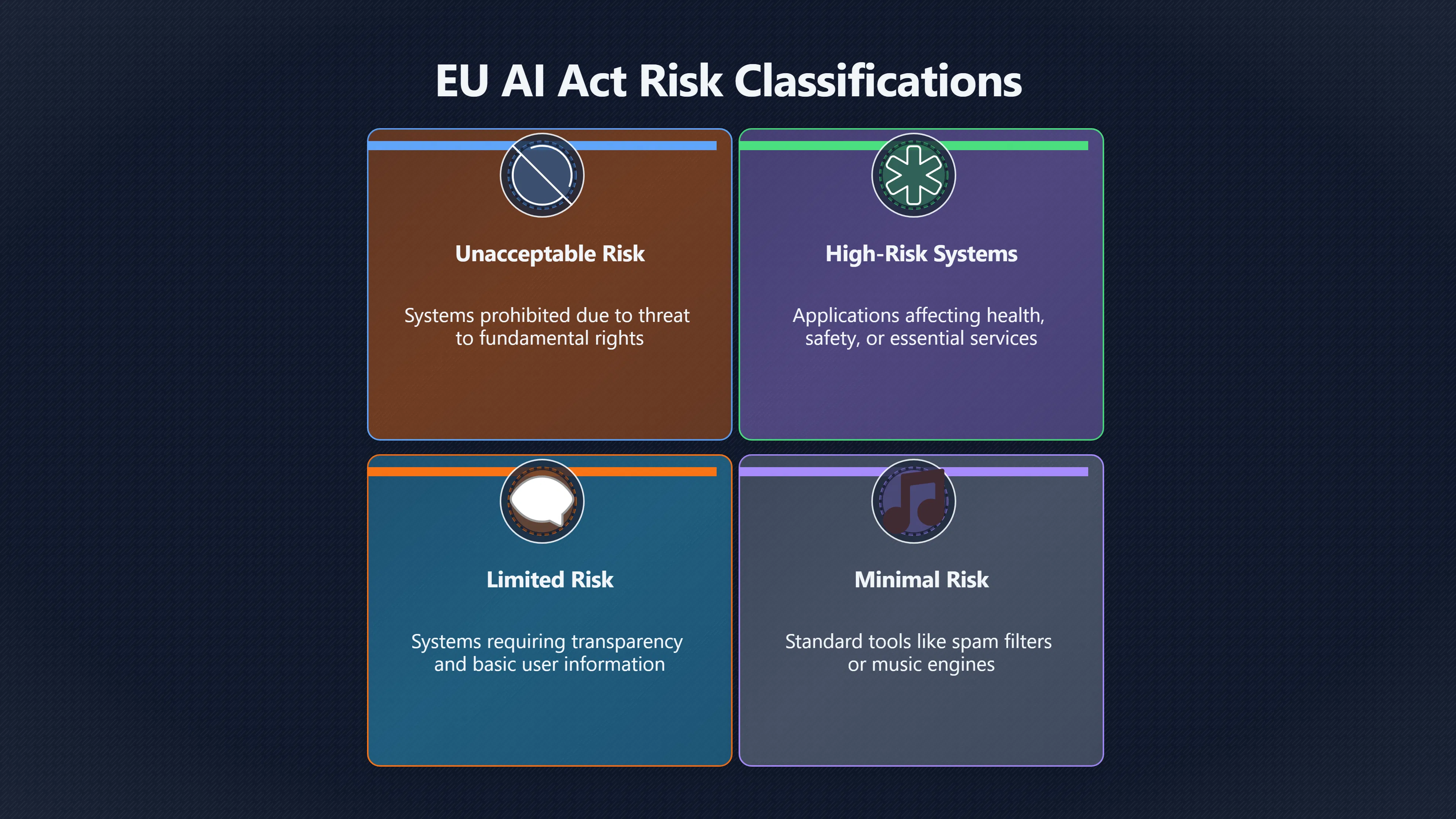
The clearest example of this approach is the European Union’s AI Act. Rather than dividing systems into “weak AI” and “strong AI”, the Act classifies them according to levels of risk. It identifies certain applications as high risk because they can affect health, safety, or fundamental rights. These categories include AI used in education, employment, access to essential services such as credit, law enforcement, migration management, justice, critical infrastructure, and biometric identification.[Digital Strategy Europe+2Artificial Intelligence Act]digital-strategy.ec.europa.euDigital Strategy Europe AI Act | Shaping Europe's digital futureThe AI Act defines 4 levels of risk for AI systems: pyramid showing the four levels of risk: Unacceptable risk; High-risk; limited…Rea…
A hiring-screening algorithm and a medical-device AI may be technically narrow systems, but they can still fall into the high-risk category because of the consequences of their outputs. Under this framework, the question is not “How intelligent is the AI?” but “What could happen if the AI is wrong, biased, manipulated, or misunderstood?”[Pinsent Masons]pinsentmasons.comguide to high risk ai systems under the eu ai actPinsent MasonsA guide to high-risk AI systems under the EU AI Act13 Feb 2024 — Providers and deployers of so-called 'high-risk' AI system…
The Act also recognises that not every narrow AI tool deserves the same level of scrutiny. A recommendation engine for music playlists and an AI system helping determine eligibility for social benefits are treated differently because the potential harms are different. This proportional approach allows regulators to concentrate oversight where the stakes are highest.[Digital Strategy Europe]digital-strategy.ec.europa.euDigital Strategy Europe AI Act | Shaping Europe's digital futureThe AI Act defines 4 levels of risk for AI systems: pyramid showing the four levels of risk: Unacceptable risk; High-risk; limited…Rea…
What safeguards matter when outputs shape lives
When an AI system is classified as high risk, regulators typically require safeguards aimed at reducing foreseeable harms. These safeguards focus on governance rather than intelligence level.
Common requirements include:
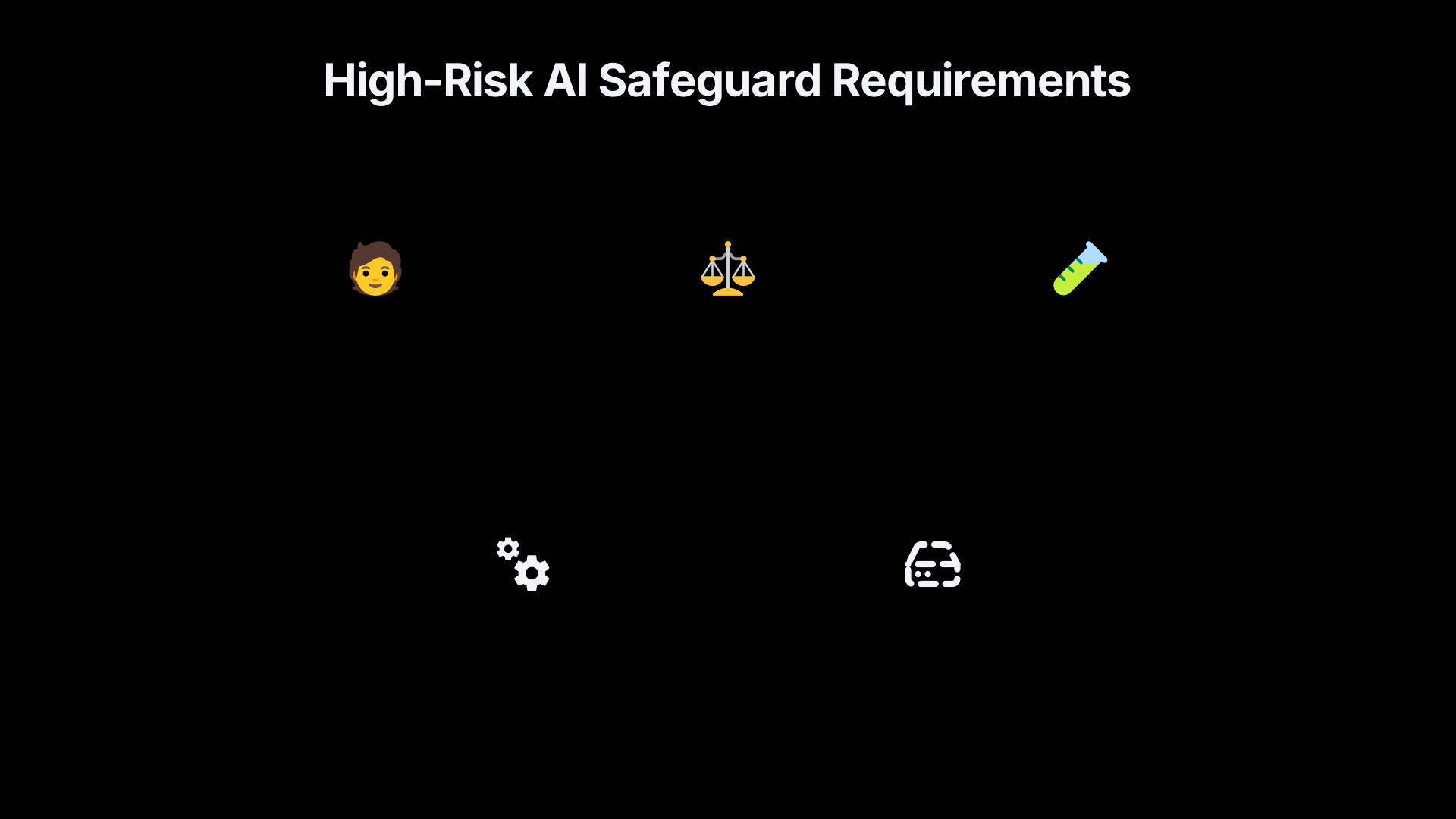
- Rigorous testing and validation before deployment.
- Monitoring for bias, discrimination, and performance failures.
- Documentation explaining how the system works and how it should be used.
- Human oversight mechanisms that allow people to review, override, or challenge AI-supported decisions.
- Record-keeping and traceability to support accountability and auditing.
- Ongoing risk management after deployment rather than one-time approval.[Artificial Intelligence Act+2Pinsent Masons]artificialintelligenceact.euArtificial Intelligence ActArticle 14: Human Oversight | EU Artificial Intelligence ActHuman oversight shall aim to prevent or minimise t…
Human oversight is especially important. The EU AI Act explicitly states that oversight measures should help prevent or minimise risks to health, safety, and fundamental rights arising from high-risk AI systems. The goal is not simply to place a human in the loop symbolically, but to ensure meaningful supervision and intervention when necessary.[Artificial Intelligence Act]artificialintelligenceact.euArtificial Intelligence ActArticle 14: Human Oversight | EU Artificial Intelligence ActHuman oversight shall aim to prevent or minimise t…
Risk management beyond formal regulation
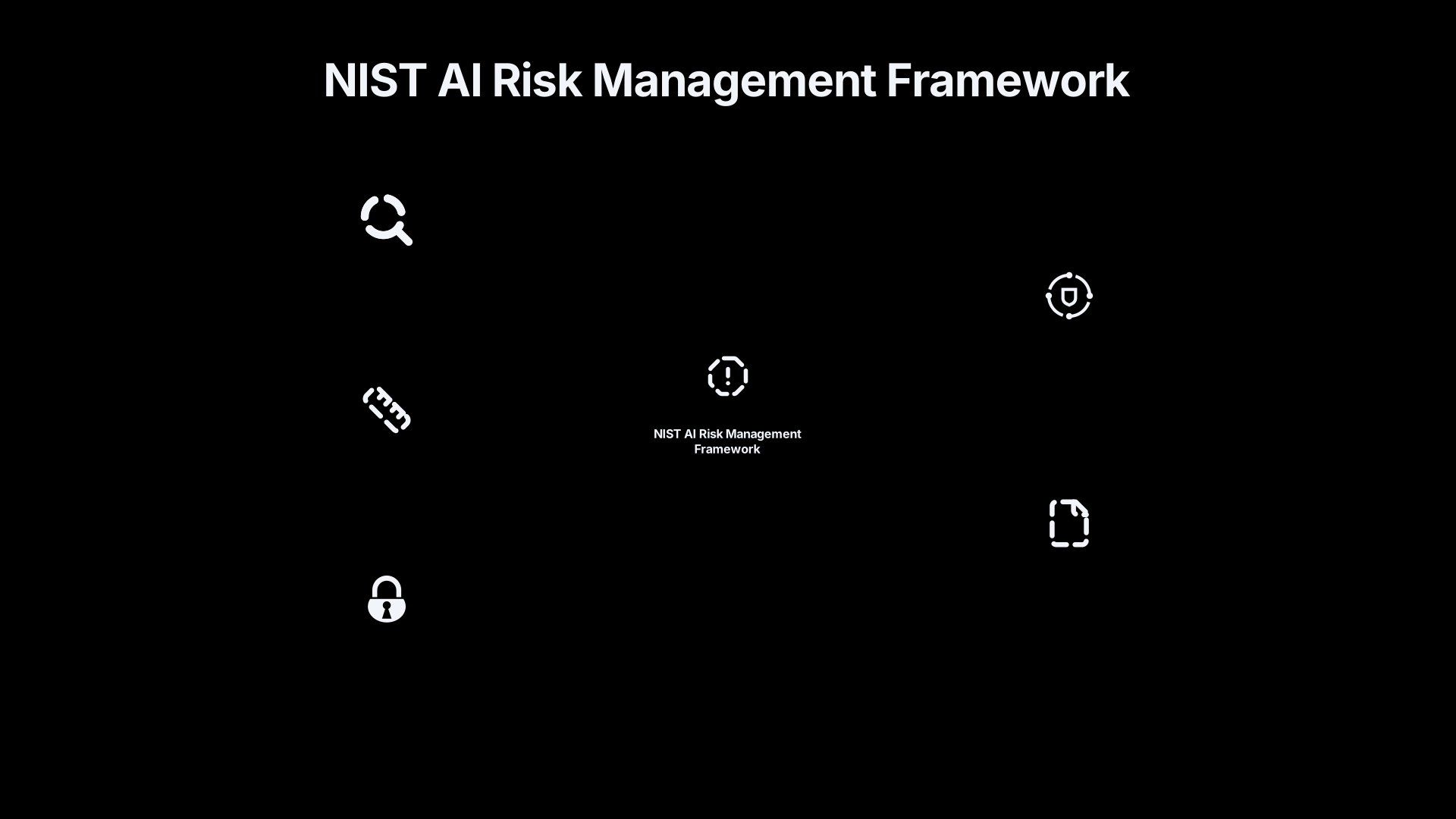
Not every jurisdiction has enacted comprehensive AI legislation, but many governments and organisations have adopted risk-management frameworks that follow similar logic. The US National Institute of Standards and Technology (NIST) AI Risk Management Framework, for example, encourages organisations to identify, measure, manage, and govern AI risks throughout a system’s lifecycle. Its focus is on harms to individuals, organisations, and society rather than on whether a system qualifies as advanced AI.[NIST+2NIST Publications]nist.govAI Risk Management Framework | NISTNIST has developed a framework to better manage risks to individuals, organizations, and society a…
Similarly, the OECD’s AI governance principles emphasise trustworthy AI, accountability, transparency, and respect for human rights. These principles support a flexible model in which safeguards become stronger as the potential consequences of AI decisions increase.[OECD+2OECD Legal Instruments]oecd.orgAI principlesThe OECD AI Principles are the first intergovernmental standard on AI. They promote innovative, trustworthy AI that resp…
The practical lesson of risk-based rules
Risk-based AI governance reflects a practical reality: narrow systems can create serious harms when they influence important decisions. A model that performs a single task may still affect employment, access to finance, healthcare outcomes, criminal investigations, or public services. Because of that, modern regulatory frameworks increasingly focus on the context of use and the severity of potential consequences rather than on abstract debates about whether a system is approaching general intelligence.[Artificial Intelligence Act+2OECD]artificialintelligenceact.euArtificial Intelligence ActAnnex III: High-Risk AI Systems Referred to in Article 6(2)These use cases include AI used in biometrics, crit…
In practice, this means that some of the strictest AI safeguards apply not to futuristic general-purpose machines, but to specialised systems making high-stakes recommendations about real people today.[Digital Strategy Europe]digital-strategy.ec.europa.euDigital Strategy Europe AI Act | Shaping Europe's digital futureThe AI Act defines 4 levels of risk for AI systems: pyramid showing the four levels of risk: Unacceptable risk; High-risk; limited…Rea…
Amazon book picks
Further Reading
Books and field guides related to Narrow AI can still be high risk. Use these as the next step if you want deeper reading beyond the article.
The Alignment Problem
Explores how AI systems can create harmful outcomes despite narrow goals.
eBay marketplace picks
Marketplace Samples
Example marketplace items related to this page. Use the search link to explore similar finds on eBay.




Endnotes
1.
Source: oecd.org
Link:https://www.oecd.org/en/topics/ai-principles.html
Source snippet
AI principlesThe OECD AI Principles are the first intergovernmental standard on AI. They promote innovative, trustworthy AI that resp...
2.
Source: oecd.org
Link:https://www.oecd.org/en/topics/ai-risks-and-incidents.html
Source snippet
AI risks and incidentsTrustworthy AI calls for governments worldwide to develop interoperable risk-based approaches to AI governance...
3.
Source: oecd.ai
Link:https://oecd.ai/en/ai-principles
Source snippet
Principles overviewThe OECD AI Principles promote use of AI that is innovative and trustworthy and that respects human rights and democra...
4.
Source: oecd.org
Link:https://www.oecd.org/en/topics/policy-issues/artificial-intelligence.html
Source snippet
Artificial intelligenceAI holds the potential to address complex challenges from enhancing education and improving health care, to drivin...
5.
Source: nist.gov
Link:https://www.nist.gov/itl/ai-risk-management-framework
Source snippet
AI Risk Management Framework | NISTNIST has developed a framework to better manage risks to individuals, organizations, and society a...
6.
Source: nvlpubs.nist.gov
Title: ai.100 1
Link:https://nvlpubs.nist.gov/nistpubs/ai/nist.ai.100-1.pdf
Source snippet
NIST PublicationsArtificial Intelligence Risk Management Framework (AI RMF 1.0)by N AI · 2023 · Cited by 223 — AI technologies, how- ever...
7.
Source: airc.nist.gov
Title: AI Resource Center Executive
Link:https://airc.nist.gov/airmf-resources/airmf/0-ai-rmf-1-0/
Source snippet
NIST AI Resource CenterExecutive Summary - AIRC - NIST AI Resource CenterThe goal of the AI RMF is to offer a resource to the organizatio...
8.
Source: legalinstruments.oecd.org
Link:https://legalinstruments.oecd.org/en/instruments/oecd-legal-0449
Source snippet
OECD Legal InstrumentsRecommendation of the Council on Artificial IntelligenceOECD.AI is an inclusive hub for public policy on AI that ai...
9.
Source: oecd.org
Link:https://www.oecd.org/en/topics/sub-issues/ai-principles.html
Source snippet
AI principlesThe OECD AI Principles promote use of AI that is innovative and trustworthy and that respects human rights and democratic va...
10.
Source: oecd.org
Link:https://www.oecd.org/en.html
Source snippet
The Organisation for Economic Co-operation and...The OECD designs international standards and guidelines for development co-operat...
11.
Source: oecd.org
Link:https://www.oecd.org/en/publications/2025/06/governing-with-artificial-intelligence_398fa287/full-report/ai-in-regulatory-design-and-delivery_128691e6.html
Source snippet
AI in regulatory design and delivery: Governing with...18 Sept 2025 — Regulators can use AI to improve risk modelling to [better target]({{ 'better-target/' | relative_url }}) i...
12.
Source: oecd.org
Link:https://www.oecd.org/en/topics/sub-issues/ai-risks-and-incidents.html
Source snippet
AI risks and incidentsThe OECD AI Principles are the first intergovernmental standard on AI. They promote innovative, trustworthy AI that...
13.
Source: oecd.org
Title: oecd due diligence guidance for responsible ai 7831bb49
Link:https://www.oecd.org/en/publications/2026/02/oecd-due-diligence-guidance-for-responsible-ai_7831bb49.html
Source snippet
OECD Due Diligence Guidance for Responsible AI19 Feb 2026 — This report provides practical guidance to enterprises for implementing OECD...
14.
Source: oecd.ai
Link:https://oecd.ai/en/site/risk-accountability
Source snippet
Risk & Accountability OverviewHigh-level AI risk management interoperability framework: Governing and managing risks throughout the lifec...
15.
Source: oecd.ai
Title: artificial intelligence risk management framework ai rmf 10
Link:https://oecd.ai/en/catalogue/tools/artificial-intelligence-risk-management-framework-ai-rmf-10
Source snippet
Artificial Intelligence Risk Management Framework...26 Oct 2023 — The goal of the AI RMF is to offer a resource to the organizations des...
16.
Source: oecd.ai
Title: tool [use cases]({{ ‘use-cases/’ | relative_url }})
Link:https://oecd.ai/en/catalogue/tool-use-cases
Source snippet
Use Cases from Tools or Trustworthy AIThis use case focuses on integrating a risk-driven approach, based on and aligning with ISO 31000 p...
17.
Source: oecd.ai
Title: ai risk intelligence systemtm for biometric and high risk ai
Link:https://oecd.ai/en/catalogue/tools/ai-risk-intelligence-systemtm-for-biometric-and-high-risk-ai
Source snippet
AI Risk Intelligence System™ for biometric and high-risk AI20 Feb 2024 — Anekanta® AI's AI Risk Intelligence System™ which is built upon...
18.
Source: airc.nist.gov
Link:https://airc.nist.gov/airmf-resources/airmf/
Source snippet
RMF - AIRC - NIST AI Resource CenterThe AI Risk Management Framework (AI RMF) is intended for voluntary use and to improve the ability to...
19.
Source: artificial-intelligence-act.com
Title: E U AI Act
Link:https://www.artificial-intelligence-act.com/
Source snippet
EU AI Act - Updates, Compliance, TrainingThe EU AI Act sets harmonised rules for the development, placement on the market and use of AI s...
20.
Source: artificial-intelligence-act.com
Link:https://www.artificial-intelligence-act.com/Artificial_Intelligence_Act_Preamble_51_to_60.html
Source snippet
s high-risk the AI systems intended to be used as safety...Read more...
21.
Source: digital-strategy.ec.europa.eu
Title: Digital Strategy Europe AI Act | Shaping Europe’s digital future
Link:https://digital-strategy.ec.europa.eu/en/policies/regulatory-framework-ai
Source snippet
The AI Act defines 4 levels of risk for AI systems: pyramid showing the four levels of risk: Unacceptable risk; High-risk; limited...Rea...
22.
Source: artificialintelligenceact.eu
Link:https://artificialintelligenceact.eu/annex/3/
Source snippet
Artificial Intelligence ActAnnex III: High-Risk AI Systems Referred to in Article 6(2)These use cases include AI used in biometrics, crit...
23.
Source: ai-act-service-desk.ec.europa.eu
Link:https://ai-act-service-desk.ec.europa.eu/en/ai-act/annex-3
Source snippet
AI Act Service DeskAI Act Service Desk - Annex III - European UnionHigh-risk AI systems pursuant to Article 6(2) are the AI systems liste...
24.
Source: pinsentmasons.com
Title: guide to high risk ai systems under the eu ai act
Link:https://www.pinsentmasons.com/out-law/guides/guide-to-high-risk-ai-systems-under-the-eu-ai-act
Source snippet
Pinsent MasonsA guide to high-risk AI systems under the EU AI Act13 Feb 2024 — Providers and deployers of so-called 'high-risk' AI system...
25.
Source: artificialintelligenceact.eu
Link:https://artificialintelligenceact.eu/high-level-summary/
Source snippet
Artificial Intelligence ActHigh-level summary of the AI ActAI systems listed under Annex III are always considered high-risk if it profil...
26.
Source: artificialintelligenceact.eu
Link:https://artificialintelligenceact.eu/article/14/
Source snippet
Artificial Intelligence ActArticle 14: Human Oversight | EU Artificial Intelligence ActHuman oversight shall aim to prevent or minimise t...
27.
Source: ai-act-service-desk.ec.europa.eu
Link:https://ai-act-service-desk.ec.europa.eu/en/guideline-explorer
Source snippet
on the classification of high-risk AI systemsChapter III AI Act imposes a set of requirements and obligations on providers and deployers...
28.
Source: intelligence.dlapiper.com
Title: artificial intelligence
Link:https://intelligence.dlapiper.com/artificial-intelligence/?c=EU&t=06-high-risk-uses
Source snippet
dlapiper.comHigh-risk AI in the European Union - AI Laws of the World11 Feb 2026 — AI systems used by law enforcement for risk assessment...
29.
Source: acuityrm.com
Title: eu ai act
Link:https://acuityrm.com/resources/eu-ai-act
Source snippet
The EU AI Act applies to any organisation placing or using AI in the EU. High-risk systems face prescriptive requirements and need...Rea...
30.
Source: witness.ai
Title: ai risk management
Link:https://witness.ai/blog/ai-risk-management/
Source snippet
NIST AI RMF & Key StrategiesNov 13, 2025 — Discover what AI risk management is, why it matters, and how to apply the NIST AI RMF with gov...
Additional References
31.
Source: privacyperfect.com
Link:https://privacyperfect.com/ai-risk-management-framework-nist/
Source snippet
AI Risk Management Framework (NIST)With the PrivacyPerfect AI Impact Assessment, you can evaluate AI systems in a consistent, transparent...
32.
Source: euairisk.com
Link:https://euairisk.com/resources/eu-ai-act-high-risk-classification-guide
Source snippet
Complete Guide to EU AI Act High-Risk ClassificationAn AI system qualifies as high-risk through either of two distinct paths: inclusion i...
33.
Source: paloaltonetworks.co.uk
Link:https://www.paloaltonetworks.co.uk/cyberpedia/nist-ai-risk-management-framework
Source snippet
NIST AI Risk Management Framework (AI RMF)The NIST AI Risk Management Framework (AI RMF) is a guidance designed to improve the robustness...
34.
Source: paloaltonetworks.com
Link:https://www.paloaltonetworks.com/cyberpedia/nist-ai-risk-management-framework
Source snippet
NIST AI Risk Management Framework (AI RMF)The NIST AI Risk Management Framework (AI RMF) is a guidance designed to improve the robustness...
35.
Source: linkedin.com
Link:https://www.linkedin.com/pulse/nist-ai-risk-management-framework-best-practices-dr-sunando-roy-k82gf
Source snippet
NIST AI Risk Management Framework: Best Practices for...The NIST AI RMF 1.0 is a voluntary, flexible, and non-prescriptive framework des...
36.
Source: hyperproof.io
Link:https://hyperproof.io/navigating-the-nist-ai-risk-management-framework/
Source snippet
Navigating the NIST AI Risk Management FrameworkUnderstand the NIST AI Risk Management Framework and learn how to govern AI risk, align s...
37.
Source: monitaur.ai
Link:https://www.monitaur.ai/blog-posts/nist-ai-risk-management-framework-and-why-it-matters
Source snippet
What is the NIST artificial intelligence (AI) risk management...NIST has been developing the AI Risk Management Framework (RMF) to “bett...
38.
Source: messervices.cyber.gouv.fr
Link:https://messervices.cyber.gouv.fr/documents-guides/high_level_risks_analysis_ai_paris_summit.pdf
Source snippet
trust in AI through a cyber risk-based approachIt aims to provide a high-level [synthetic]({{ 'synthetic-media/' | relative_url }}) and comprehensive analysis of related cyber risk...
39.
Source: thoropass.com
Link:https://www.thoropass.com/blog/nist-ai-rmf
40.
Source: blog.bham.ac.uk
Link:https://blog.bham.ac.uk/lawresearch/2024/10/real-world-cases-of-annex-iii-ai-act-applications-that-posed-risks-to-fundamental-rights/
Source snippet
World Cases of Annex III AI Act applications that posed...4 Oct 2024 — AI systems which constitute Annex III high risk systems implicate...
Topic Tree